

Mechanical Wear Quietly Destroys Pallet Wrapping Performance
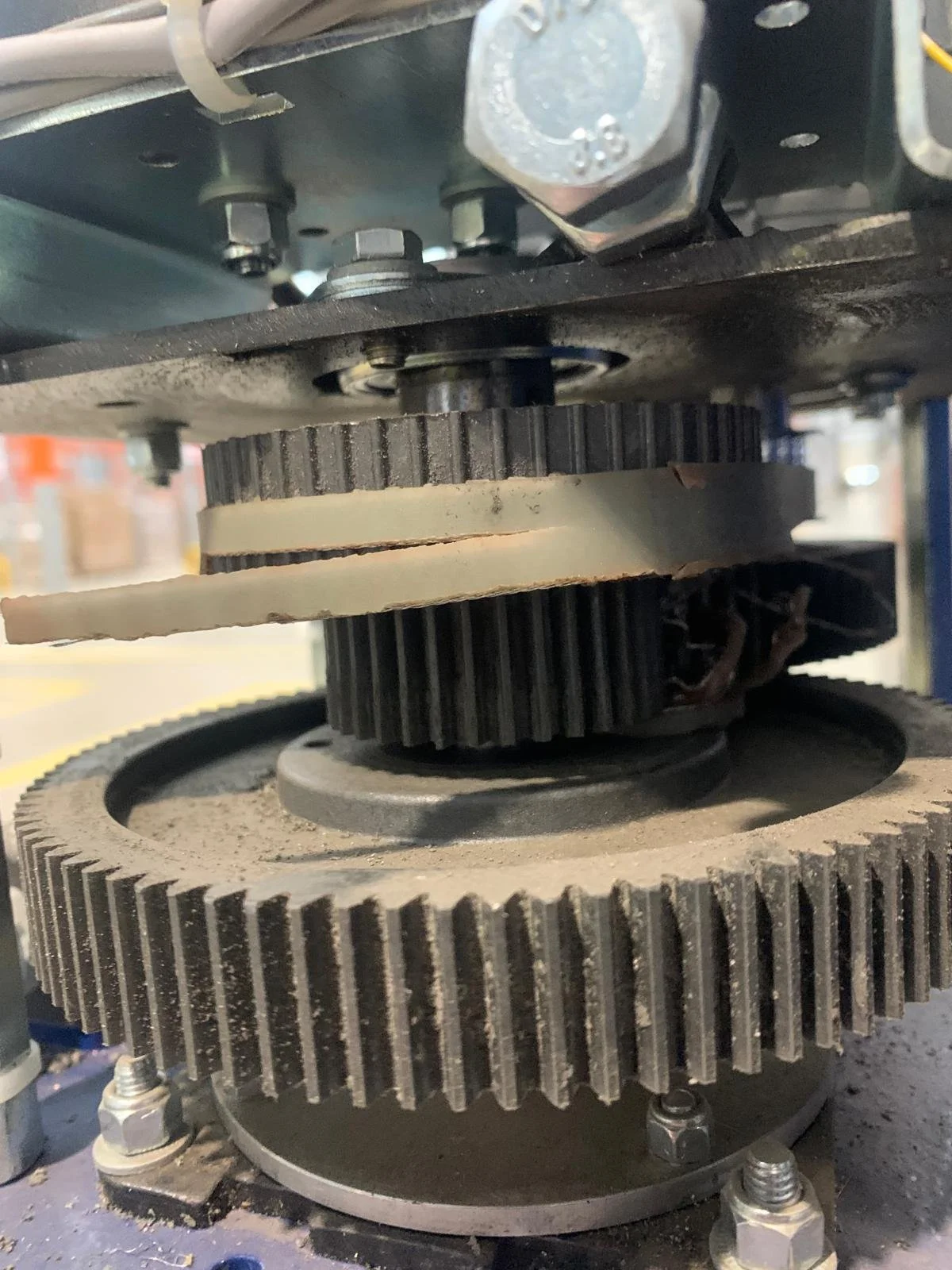
Hidden film build-up, stretched chains, broken chains, shredded belts and drifting carriage systems reduce stretch performance, increase film usage and weaken containment long before the pallet wrapper fully breaks down.
The Machine Can Look Fine While Performance Is Collapsing
Mechanical wear rarely announces itself cleanly. A pallet wrapper can still rotate, still apply film and still finish cycles while hidden faults are already forming underneath the machine.
One of the worst examples is stretch film roped around moving components. It can stay hidden for long periods, gradually tightening, increasing resistance and eventually contributing to seizure or mechanical failure.
Excelerate identifies these wear points before they become serious downtime, excessive film usage or permanent component damage.
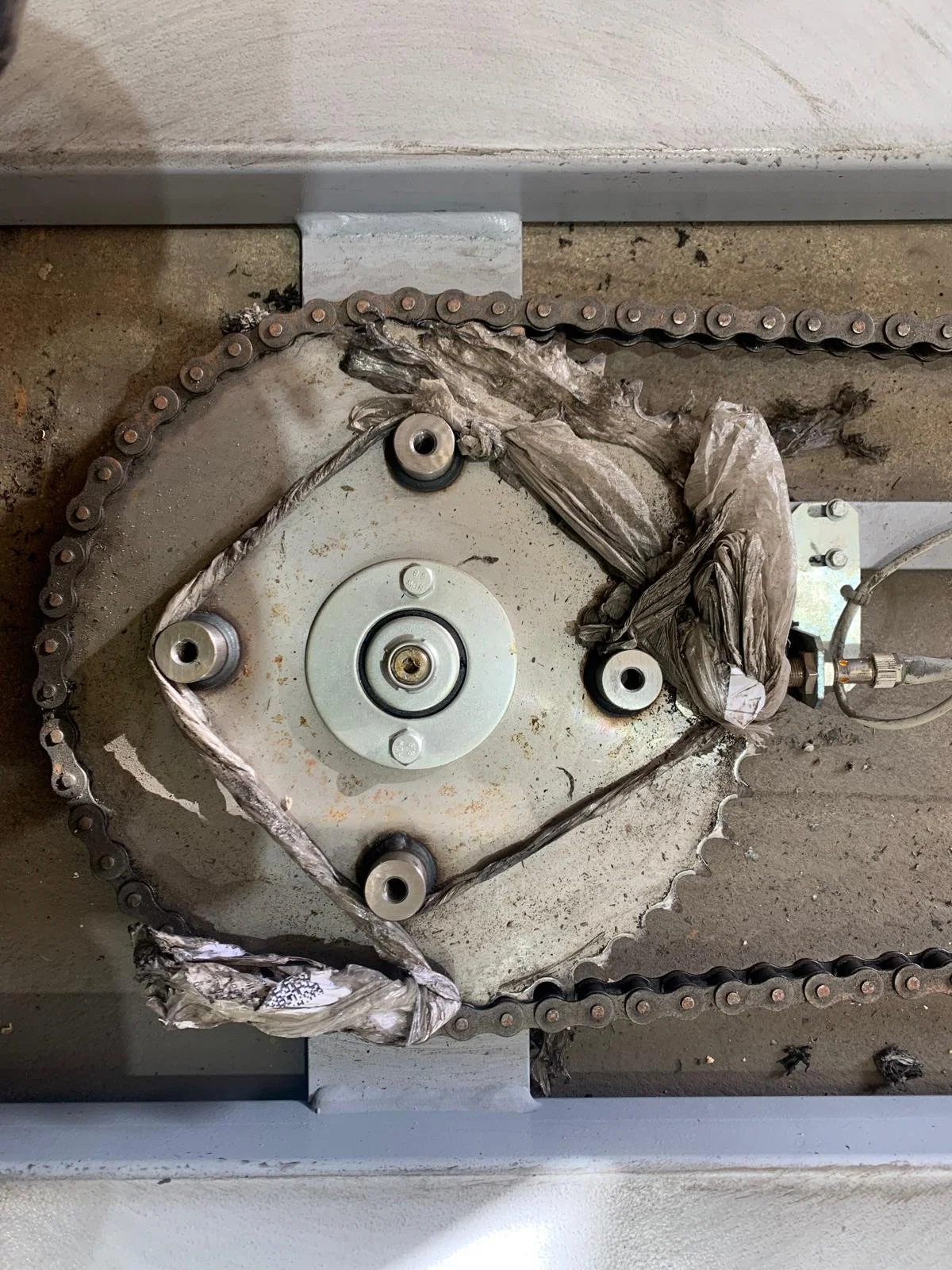
Mechanical Wear Symptoms That Cost Money
These problems are often treated as small annoyances. They are not. They are early warning signs that the machine is damaging wrapping efficiency.
Film Snapping More Often
Damaged rollers, drag and tension instability can overload the film path and cause repeated breaks.
Higher Film Usage
Operators add more rotations to compensate for poor containment caused by mechanical degradation.
Inconsistent Stretch
Worn or contaminated systems can prevent the film from stretching consistently through the machine.
Loose Pallet Loads
Poor machine movement and weak tension transfer can leave pallets wrapped but not properly contained.
Chain Stretch Or Breakage
Chains can stretch, slacken or fail completely, affecting drive consistency, carriage movement and wrapping reliability.
Noisy Or Rough Operation
Grinding, vibration and rough movement are mechanical warnings, not background warehouse noise.
Chains Stretch, Slack And Eventually Fail
Chain wear is one of the mechanical issues that can sit in the background until wrapping behaviour becomes erratic or the machine fails completely.
As chains stretch or become damaged, movement can become less accurate. That can affect carriage travel, table movement, cycle consistency and how evenly the machine applies film to the pallet.
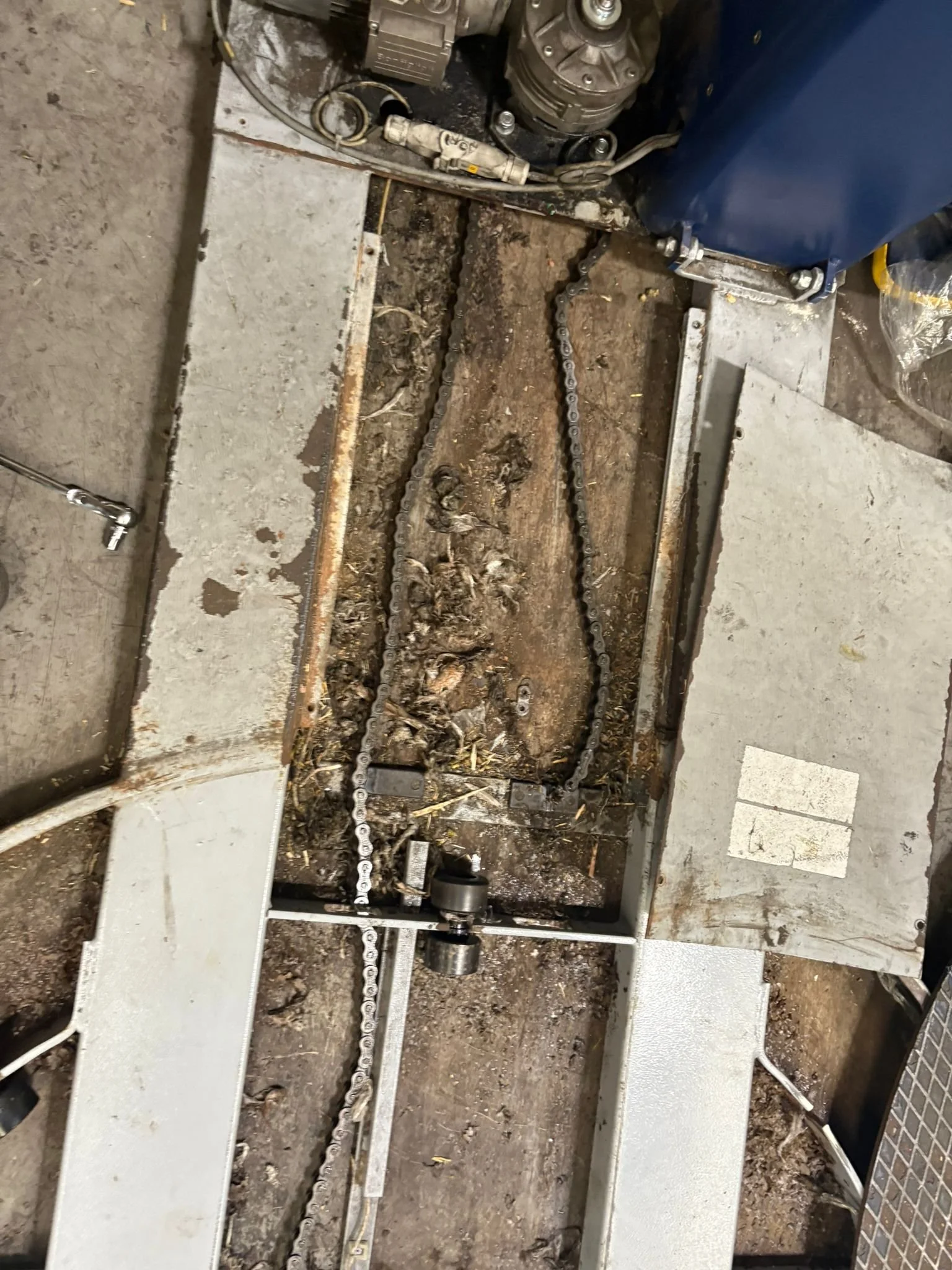
Mechanical Wear Damages Cost Per Pallet
The biggest mistake is only thinking about mechanical wear when the machine breaks down. By that point, the site may have already paid for the fault through months of excess film usage, slower output and unstable pallet loads.
Mechanical wear changes the way film is stretched, tensioned and applied. That means the same roll of film can deliver worse performance simply because the machine is no longer mechanically correct.
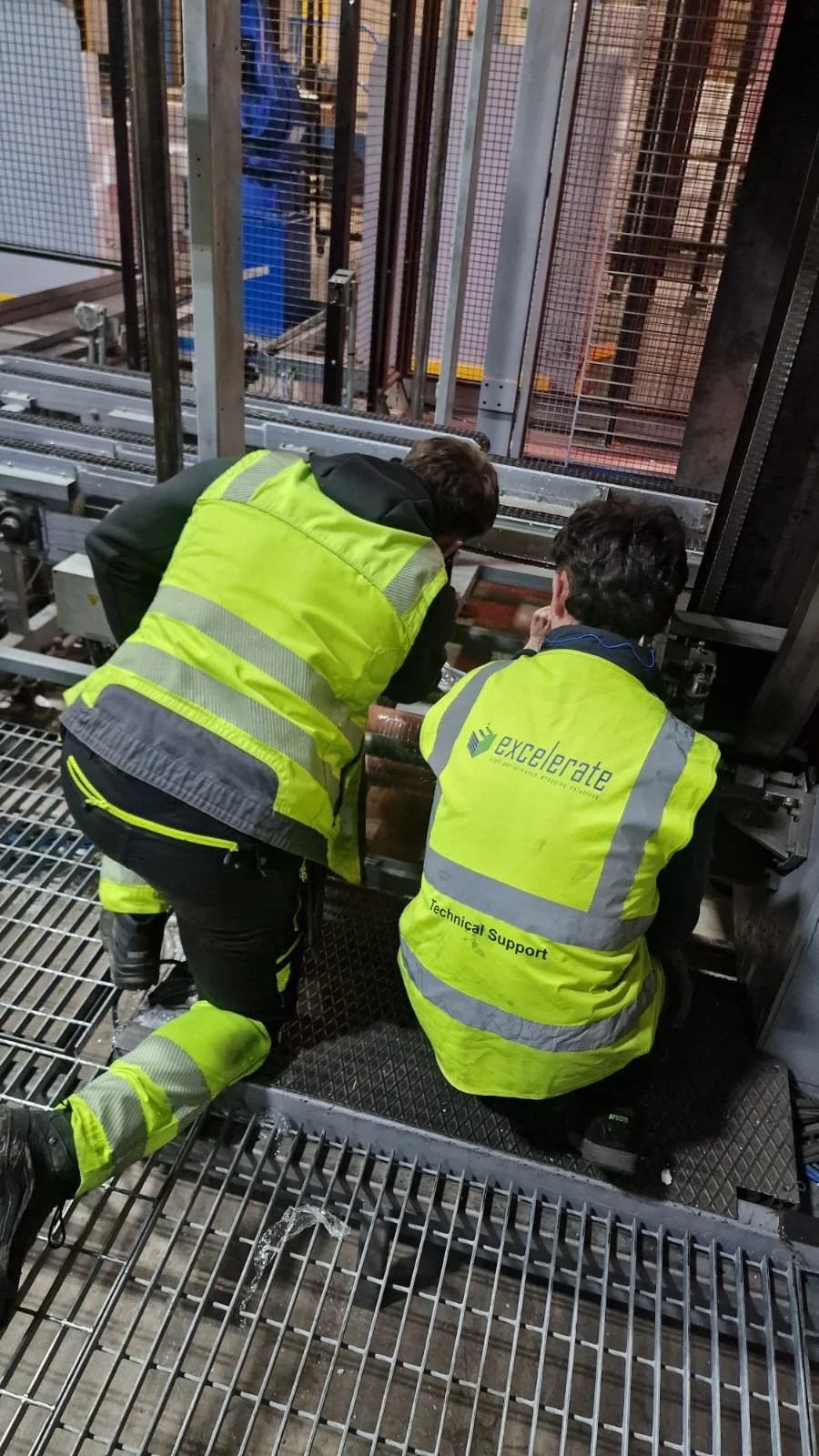
How Excelerate Identifies Mechanical Wear
We inspect the components that directly affect film application, movement quality, machine reliability and pallet containment.
Inspect Movement
We assess table rotation, carriage travel, chain condition, drivetrain behaviour and any mechanical resistance.
Check Wear Points
Belts, chains, shafts, rollers, guides, film build-up and moving assemblies are reviewed for damage or deterioration.
Assess Film Behaviour
We review snapping, stretch consistency, tension transfer, wrap placement and load contact.
Prevent Escalation
We recommend repair, servicing, cleaning, calibration or optimisation before small issues become major failures.
Continue Through The Technical Centre
Mechanical wear connects directly to diagnostics, pallet wrapper repair, machinery servicing, pallet wrap optimisation and load stability.
Do Not Wait Until The Machine Fails Completely
Hidden film build-up, stretched chains, shredded belts, carriage drift and mechanical contamination increase film usage and weaken wrapping performance long before a full breakdown occurs. Excelerate can identify the wear, correct the cause and protect the wrapping process.