

Condensation Inside Pallet Wrap Is A System Failure
Trapped heat, poor airflow and solid film can create condensation, cooling delays, rejected deliveries and shelf-life problems across food manufacturing, chilled logistics, pharmaceutical handling and temperature-sensitive supply chains.
Why Condensation Happens After Wrapping
Condensation usually appears when warm or moisture-sensitive product is wrapped too tightly in standard solid stretch film. Heat and moisture have nowhere to escape, so they collect inside the palletised load.
This is common in sauces, dairy, bakery, chilled food, fresh produce, horticulture, pharmaceuticals and products packed shortly after production. The pallet looks secure, but the wrapped environment is working against the product.
Excelerate looks at airflow, cooling time, product temperature, wrap pattern, film type and containment force together. That is where breathable pallet wrapping becomes a technical system, not a commodity product.
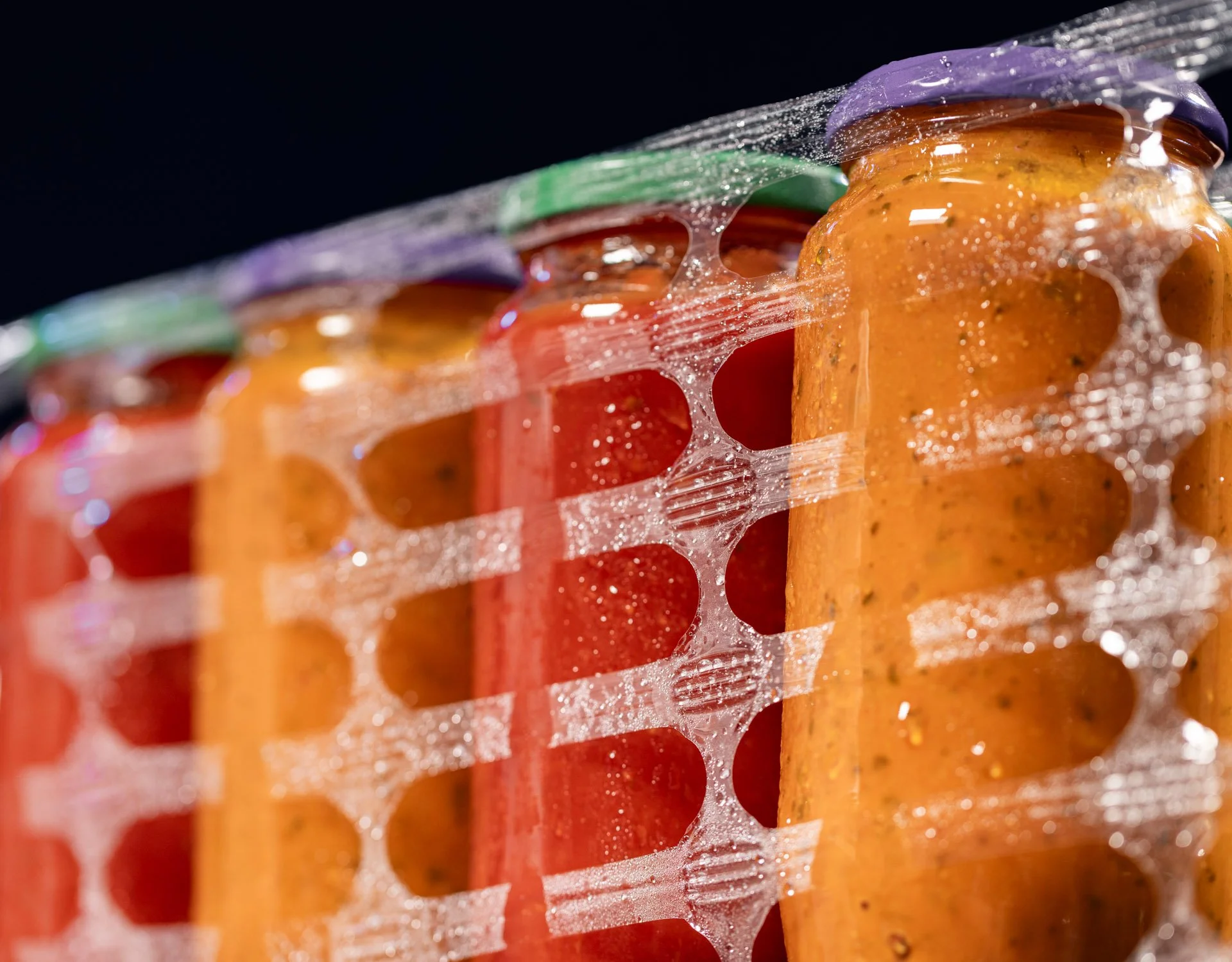
Operational Problems Caused By Trapped Heat
Condensation is not just a visual issue. It can slow production flow, damage product presentation and create avoidable supply chain problems.
Delayed Despatch
Sites often wait for pallets to cool before wrapping or loading. Breathable film can help reduce that waiting time by allowing heat to escape.
Rejected Deliveries
Moisture trapped inside wrapped pallets can affect labels, boxes, tray stability, appearance and customer acceptance on arrival.
Reduced Shelf Life
Warm, sealed pallet environments can create poor conditions for fresh, chilled and moisture-sensitive products.
Wet Labels & Packaging
Condensation can soften cardboard, damage labels and create poor presentation before the product even reaches the customer.
Cooling Inefficiency
Solid wrap blocks airflow. Cold air cannot work efficiently through a sealed palletised load.
Unnecessary Handling
Where air, gas, sterilant or temperature needs to pass through a pallet load, solid film can create avoidable rework and labour.
Airflow And Containment Must Work Together
The mistake many businesses make is treating ventilation and load stability as opposite goals. They are not. A properly engineered perforated pallet wrap system must allow airflow while still creating enough containment force to hold the pallet together.
This is where Excelerate separates itself from generic film suppliers. We understand how perforated film behaves under stretch, how machine settings affect the film, and how airflow must be balanced with real pallet stability.
Pharmaceutical Pallet Sterilisation Without Constant Re-Wrapping
In pharmaceutical and medical supply chains, pallet loads may need to pass through sterilisation processes before onward movement or storage. With standard solid stretch film, that can create a repeated handling problem.
Pallets are wrapped, moved, unwrapped for sterilisation, then wrapped again afterwards. Every cycle adds labour, time, plastic usage, waste handling and operational interruption.
ExcelAir perforated pallet wrap creates a different possibility. Because the film allows flow through the wrapped load, sterilisation processes may be able to reach the palletised goods without removing and replacing the wrap.
ExcelAir: Breathable Pallet Wrap Engineered For Real Operations
ExcelAir perforated pallet wrap is designed for businesses where standard solid stretch film creates problems: trapped heat, condensation, cooling delays, wet packaging, poor airflow and unnecessary re-wrapping.
The aim is not simply to add holes to film. The aim is to engineer a wrapping system that maintains stability while allowing the palletised product or process environment to breathe.

How Excelerate Assesses Condensation, Cooling And Airflow Problems
We assess the full wrapping environment before recommending a film change. Condensation, cooling restriction and sterilisation access are usually symptoms of a wider operational issue.
Review Product Conditions
We look at temperature, moisture, packaging type, sterilisation requirements and how soon pallets are wrapped after production.
Assess Current Wrap
Solid film, wrap pattern, tension, stretch and airflow restriction are reviewed.
Match Breathable Film
We identify whether perforated stretch film can improve airflow, cooling or process access without compromising pallet stability.
Validate Operationally
The final solution must work in real despatch, storage, cooling, sterilisation and transport conditions.
Continue Through The Technical Centre
Condensation and cooling performance connect directly to perforated pallet wrap, load stability, machine setup, pharmaceutical process access and operational wrapping performance.
Solid Film Can Be The Wrong Answer For Airflow-Critical Pallet Loads
If your wrapped pallets are trapping heat, creating condensation, delaying cooling or forcing unnecessary unwrap and re-wrap cycles before sterilisation, Excelerate can help diagnose the cause and engineer a breathable pallet wrapping system that works properly.