

Robot Pallet Wrapper vs Turntable Pallet Wrapper
Robot and turntable pallet wrappers both reduce manual wrapping, improve consistency and support better load containment. The right choice depends on how pallets move through your operation, where they are built, how much space you have and whether the load should move to the machine or the machine should move to the load.
The Decision Is Not Robot vs Turntable. It Is Workflow vs Workflow.
Most sites make the mistake of comparing pallet wrappers as products. The better question is operational: where is the pallet built, where does it need to be wrapped, how often does it move and what labour is being wasted between those steps?
Many production lines still manually stack cartons or packs onto pallets, then hand wrap the load at the end of the line. Pick and pack operations often do the same during despatch peaks. A correctly selected pallet wrapper can remove that manual wrapping labour, reduce repetitive strain, improve consistency and create a cleaner final despatch process.
Production Lines
Where operators manually stack at the line end, wrapping automation can remove a repeated manual task from every pallet.
Pick & Pack
Robot wrappers can support flexible wrapping points where pallets are built across different zones or during seasonal peaks.
Despatch Flow
Turntables work well where pallets naturally flow to one fixed wrapping point before loading or storage.
Health & Safety
Automated wrapping reduces bending, pulling, twisting and repetitive manual film application.
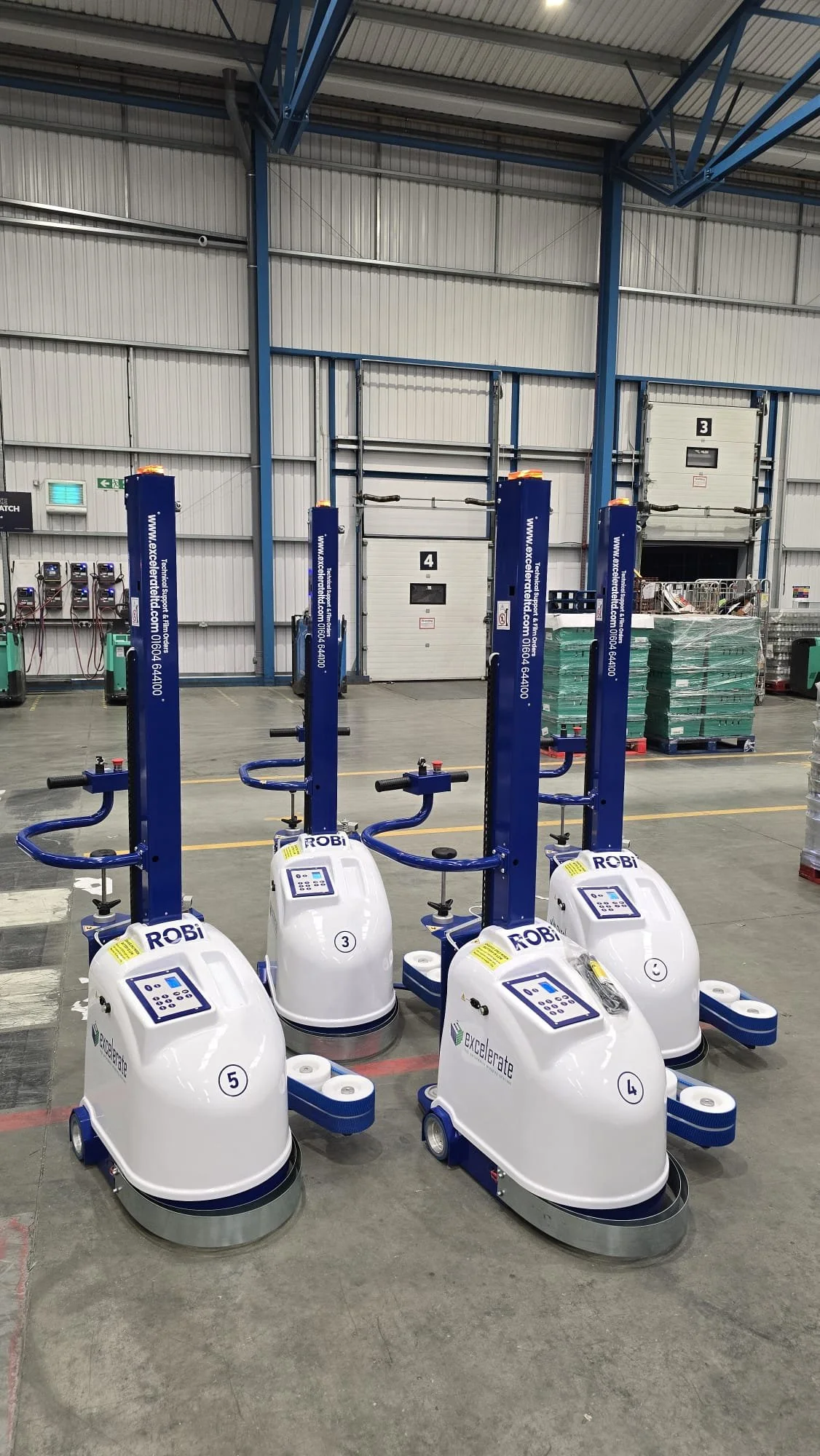
When A Robot Pallet Wrapper Makes More Sense
A robot pallet wrapper is usually stronger when pallets are built in different areas, space is restricted or moving every pallet to one fixed wrapping machine creates wasted handling.
This is especially relevant for pick and pack environments, mixed despatch operations and production areas where pallets are manually built at the end of a packing line.
- ✓ Multiple wrapping locations
- ✓ Restricted warehouse space
- ✓ Reducing pallet movement
- ✓ Flexible pick and pack operations
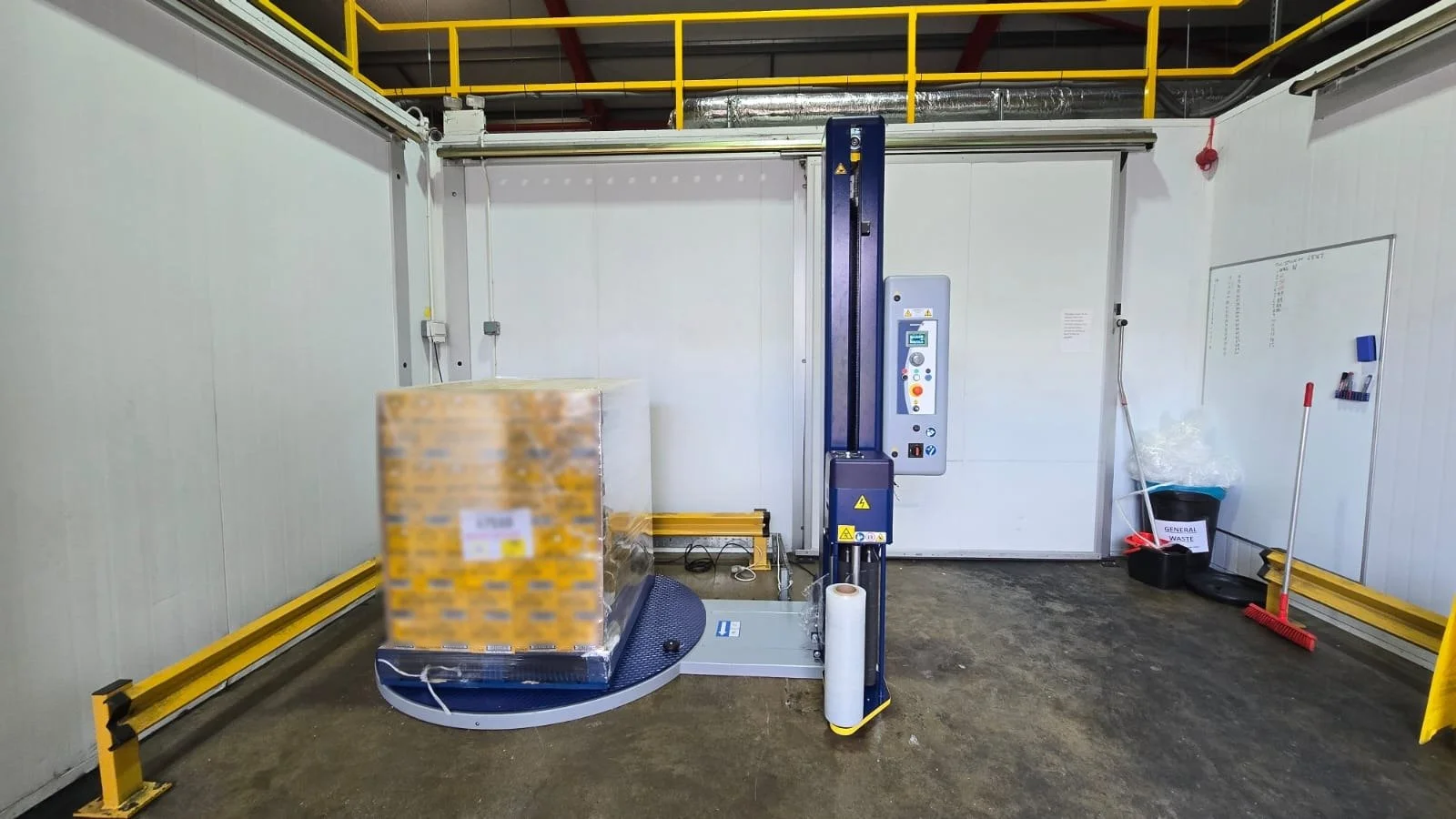
When A Turntable Pallet Wrapper Makes More Sense
A turntable pallet wrapper is usually stronger when pallets naturally move to a fixed wrapping zone and the site needs a simple, repeatable and cost-effective wrapping process.
Turntables are often the right fit for standard pallet flows, consistent production layouts and warehouse operations where the wrapping location does not need to move.
- ✓ Fixed wrapping area
- ✓ Regular pallet flow
- ✓ Simple operator process
- ✓ Strong film cost control
Comparison: Robot Wrapper vs Turntable Wrapper
The wrong machine can still wrap pallets. It can also create unnecessary forklift movement, labour waste, poor operator flow or avoidable film cost. This table gives the practical difference.
| Operational Factor | Robot Pallet Wrapper | Turntable Pallet Wrapper |
|---|---|---|
| Best basic principle | The machine moves around the pallet. | The pallet rotates on the machine. |
| Best for | Flexible wrapping points, pick and pack, changing layouts and restricted space. | Fixed wrapping zones, regular pallet flow and standard warehouse despatch. |
| Production line use | Useful where pallets are manually built at the line end and wrapping can happen at point of build. | Useful where pallets can be moved to a fixed wrapper at the end of the line. |
| Labour reduction | Reduces hand wrapping and unnecessary pallet movement between zones. | Reduces hand wrapping at a fixed wrapping point. |
| Floor space | Strong where fixed space is limited or wrapping points need to move. | Needs a dedicated wrapping position and access space around the machine. |
| Load movement | The pallet can often stay where it is built. | The pallet must be moved onto the turntable. |
| Consistency | Improves consistency compared with manual wrapping if setup and operator use are controlled. | Very consistent when programme, film and pre-stretch settings are correct. |
| Film control | Depends on robot carriage, tension control, film quality and wrap pattern. | Powered pre-stretch turntables can give excellent film yield and repeatability. |
| Best warning | Not ideal if the site wants a fixed, conveyor-fed, fully automatic line. | Not ideal if pallets are unstable or awkward to move before wrapping. |
Production Lines: The Labour Nobody Counts Properly
Manual Stack, Manual Wrap, Repeat All Day
Many packing lines are not fully automated. Operators stack cartons, trays or cases onto a pallet manually, then hand wrap the pallet at the end of the line. That final wrapping step becomes a repeated labour drain across every shift.
The cost is not only the film. It is the bending, twisting, walking, time loss, inconsistency and the risk of pallets being wrapped differently depending on operator habit.
- ✓ Less manual wrapping labour
- ✓ More consistent wrap pattern
- ✓ Lower repetitive strain risk
- ✓ Cleaner end-of-line flow
Which Machine Fits The Line?
If pallets always finish in the same place and can safely be moved to a wrapper, a turntable can be the cleanest solution.
If pallets are built in multiple areas, space is tight or the line layout changes, a robot wrapper can remove the need to centralise every pallet around one fixed machine.
The key is not buying automation for the sake of automation. The key is removing the specific labour step that slows the line, adds inconsistency or creates health and safety risk.
Pick And Pack Operations: Robot Wrappers Can Be A Better Fit
Pick and pack environments often have variable pallet sizes, multiple build locations, changing demand and peak pressure. In these operations, a fixed wrapping machine can sometimes create extra movement instead of reducing work.
Wrap Where Pallets Are Built
Robot wrappers can support wrapping closer to the pick face, packing bench, despatch lane or temporary build area.
Reduce Forklift Interruption
Moving every pallet to one fixed machine can drag forklift or pump truck time away from despatch priorities.
Peak Season Flexibility
Mobile robot wrappers can support changing layouts and temporary despatch pressure better than fixed machinery.
Film Use, Load Stability And Cost Per Pallet
Robot or turntable, the machine is only part of the result. Film selection, pre-stretch, secondary tension, wrap pattern and pallet build quality still control real-world performance.
Film Yield
Film cost should be judged by cost per pallet, not roll price alone.
Load Stability
The aim is controlled containment, not simply adding more film.
Pallet Wrap
Machine-grade film must match the wrapper, carriage and load profile.
Perforated Wrap
Fresh, chilled and airflow-critical loads may need ventilated film.
Simple Rule: Choose The Machine Around Pallet Movement
Choose A Robot Wrapper If...
- ✓ Pallets are built in different areas
- ✓ You want to reduce movement to a fixed wrapper
- ✓ Space is tight or layout changes
- ✓ You operate pick and pack or mixed despatch
- ✓ You need flexible wrapping during peak periods
Choose A Turntable Wrapper If...
- ✓ Pallets naturally arrive at one wrapping point
- ✓ You want a fixed machine with repeatable programmes
- ✓ Standard pallet flow is already controlled
- ✓ You want strong powered pre-stretch film savings
- ✓ You have room for a dedicated wrapping zone
FAQ - Robot vs Turntable Pallet Wrappers
Is a robot pallet wrapper better than a turntable?
Which is better for pick and pack operations?
Which is better for production lines?
Does automation improve health and safety?
Which machine uses less film?
Can Excelerate help choose between robot and turntable wrappers?
Do Not Buy The Machine Until You Understand The Flow
The best pallet wrapper is the one that removes the right problem. For some sites, that is a turntable wrapper in a fixed despatch area. For others, it is a robot pallet wrapper that can move to the pallet and support multiple wrapping points.
Excelerate helps UK operations choose pallet wrapping machinery around labour reduction, load stability, film cost, operator flow and real warehouse pressure.