

Why Are Your Pallets Sweating? The Winter Condensation Problem Facing UK Manufacturers
Your product is warm. Your warehouse is cold. And your pallet wrap could be making things worse.
Every autumn, UK manufacturers face a problem that can seemingly appear overnight.
The production line hasn't changed. The products are the same. The wrapping machinery is running exactly as it was during summer.
Yet suddenly, pallets are developing condensation beneath the stretch film. Cartons are damp, labels are peeling, and perfectly good products are arriving in storage or at customers looking anything but perfect.
So what's changed? The weather.
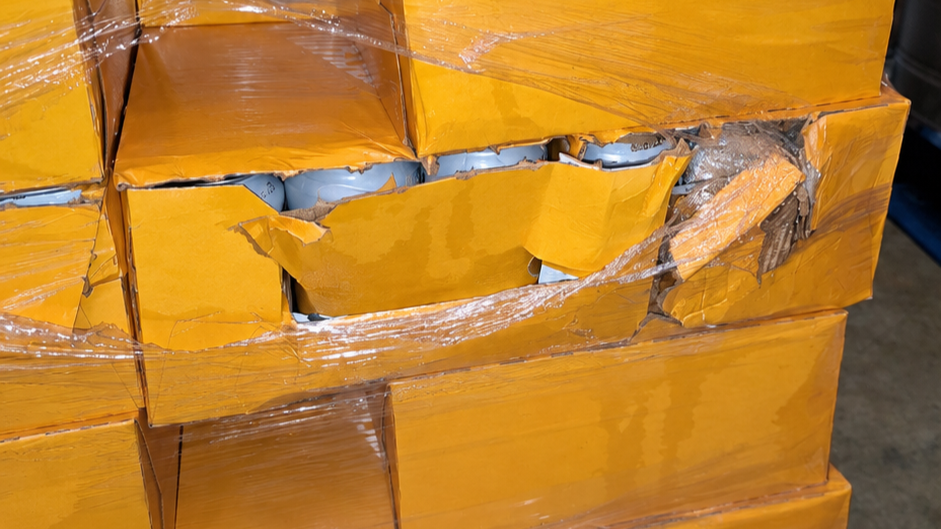
Pallet of product suffering from heat-derived condensation before we introduced ExcelAir perforated pallet wrap.
Same Production Process. Very Different Conditions.
Consider a manufacturer producing sauces, preserves, bottled beverages or other hot-filled products.
Goods leave production carrying residual heat. They're packed, palletised and wrapped before entering storage or being prepared for despatch.
During warmer months, the difference between product and warehouse temperatures may be relatively modest.
But when winter arrives, a warm pallet can suddenly find itself in a considerably colder environment.
And if it's tightly wrapped in conventional solid stretch film, that residual heat and moisture may struggle to escape.
The result? A pallet that effectively starts sweating beneath its own packaging.
What's Actually Happening Inside the Pallet?
Condensation occurs when moisture-laden air encounters a surface cold enough for water vapour to turn into liquid.
Inside a wrapped pallet, residual heat, moisture and restricted ventilation can create the conditions for this to happen.
As the pallet cools, water droplets may form on the inside of the film, cartons or product packaging.
And here's something manufacturers often overlook:
A cold warehouse doesn't necessarily mean a cold pallet.
The outside of a tightly stacked load may cool considerably faster than its centre, especially when layers of stretch film restrict airflow.
Your warehouse temperature might look perfectly acceptable, while the conditions inside the pallet tell a very different story.
The Real Cost Isn't the Condensation. It's What Happens Next.
A few droplets of water might not sound particularly serious. But across hundreds or thousands of pallets, the consequences can add up quickly.
Damaged cartons: Moisture can weaken corrugated packaging and compromise stacking performance.
Labels and barcodes: Peeling labels or unreadable codes create traceability and handling problems.
Reworking pallets: Unwrapping, drying, inspecting and rewrapping consumes labour and film.
Delayed despatch: Products may require additional cooling or inspection before release.
Customer complaints: Damp packaging can result in rejected deliveries or additional quality checks.
Product quality and hygiene: Persistent moisture can create additional risks where packaging or product conditions permit microbial growth.
For high-volume food and beverage manufacturers, even a small amount of rework per pallet can become a significant operational expense.
And the frustrating part? The product itself may be perfectly fine.
Is Your Pallet Wrap Part of the Problem?
Conventional solid stretch film is excellent for securing loads, protecting products and maintaining stability during transport.
But it's not necessarily the right solution for every application.
When warm products still need to release heat, multiple layers of solid film can restrict ventilation and slow the cooling process.
This is where perforated pallet wrap can make a significant difference.
Unlike conventional solid film, perforated stretch film incorporates openings that allow air to pass through the wrapping layer.
When properly specified, it can help:
Improve ventilation around palletised products.
Support the release of residual heat and moisture.
Reduce the potential for trapped condensation.
Maintain the containment needed for safe handling and transport.
At Excelerate, our ExcelAir perforated pallet wrap is designed for applications where airflow matters just as much as load stability.
Of course, perforated film isn't a magic fix. Carton design, pallet configuration, humidity and the wider cooling process all influence the outcome.
The objective isn't simply to wrap the pallet. It's to wrap it without working against the product.
Five Questions Worth Asking This Winter
If condensation is appearing on your wrapped pallets, start here:
How warm is the product when it's wrapped? Residual heat may remain long after production.
Where does the pallet go next? Consider temperature changes between production, warehousing, loading bays and transport.
Can air actually circulate? Film type, carton design and stacking patterns all affect ventilation.
When does the moisture appear? Immediately after wrapping, overnight or after transport? The timing can help identify the cause.
What's being affected? Film, cartons, labels or the product itself? Understanding the damage helps determine the appropriate solution.
These questions can reveal whether the problem lies with the wrapping material, the cooling process or a combination of both.
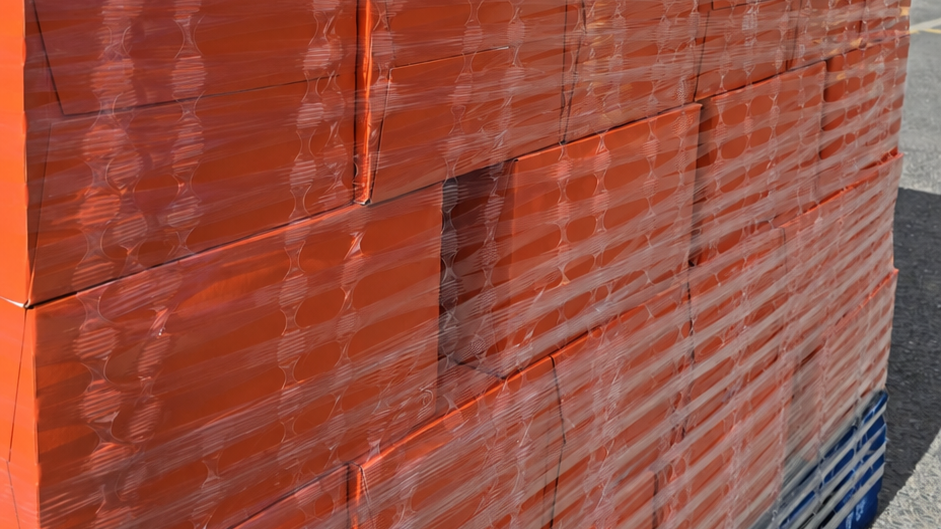
The same product, now wrapped in our high-ventilation perforated, breathable, vented stretch film.
Don't Let Winter Expose a Weakness in Your Wrapping Process
For manufacturers handling warm, chilled or moisture-sensitive products, winter can reveal packaging problems that remain largely invisible throughout summer.
But solving them doesn't necessarily mean investing in new machinery or making major changes to production.
Sometimes, the biggest improvement comes from reconsidering the film being used and how it's applied.
At Excelerate, we help UK manufacturers investigate condensation, improve pallet ventilation and develop wrapping solutions that balance airflow, containment and cost per pallet.
If your pallets are starting to sweat, it might be time to look at what's happening beneath the wrap.
Explore Further
Condensation & Cooling Performance — Technical Centre
