

Perforated Pallet Wrap: The Complete UK Technical Guide
A practical engineering guide to perforated stretch film, ventilated pallet wrap and breathable pallet wrapping systems: how airflow is created, how containment is retained, what affects cooling and condensation, how machinery changes performance and how to validate the true cost per pallet.
Written for UK manufacturers, food and beverage operations, cold stores, horticultural businesses, pharmaceutical sites, logistics teams, engineers and procurement professionals who need more than a generic film specification.
- Perforated pallet wrap
- Ventilated stretch film
- Breathable machine film
- Cooling & condensation
- Load containment
- Cost per pallet
Use This As A Technical Handbook
Read the guide in sequence or jump directly to the part of the wrapping system you need to investigate.
What Perforated Pallet Wrap Actually Is
Perforated pallet wrap is not simply conventional stretch film with random holes. It is a load-containment material engineered with controlled openings so air, heat, moisture vapour or a process medium can move through the wrapped pallet.
Two Functions Must Coexist
A successful perforated stretch-film system must perform two jobs at the same time. The open areas must create a useful path for ventilation, while the remaining film structure must apply enough usable holding force to keep the pallet together through wrapping, internal movement, storage and transport.
Those functions can conflict when the material is poorly specified. Increasing open area may improve ventilation but reduce the amount of load-bearing film. Increasing tension may improve containment but distort the openings, narrow the film or initiate tearing. The correct design is therefore an engineering balance, not a single thickness or roll-price decision.
The terms perforated pallet wrap, ventilated pallet wrap, breathable pallet wrap and airflow stretch film are often used for the same broad category. They do not guarantee that two products have the same structure or performance.
Do Not Buy The Category Name
Ask how the material is constructed, how it behaves under stretch, what roll format it uses and how it was validated. “Breathable” describes the objective. It does not describe the engineering.
Perforated Wrap Performance Is Controlled By Five Variables
Film selection is only one part of the decision. The correct system is determined by the product, its packaging, the pallet, the process and the journey after wrapping.
Open Film Does Not Automatically Create An Open Pallet
Air must pass through the film, through or around the secondary packaging and into the pallet core. If any part of that route is blocked, the theoretical ventilation area will not translate into useful operational airflow.
The Five Airflow Gates
- Film access: the openings must remain available after stretching, overlapping and wrapping.
- Packaging access: carton walls, tray sides, liners and sleeves must not form a second sealed barrier.
- Internal route: gaps between packs and layers determine whether air can reach the pallet core.
- External movement: fans, cold-store circulation, vehicle airflow or natural convection provide the force that moves air.
- Time: a ventilated pallet still needs enough dwell time for heat and moisture to move.
The Variables Behind A Perforated Stretch Film Specification
Film thickness alone is an incomplete specification. The performance of perforated machine film or hand wrap depends on the relationship between the base material, the open pattern, the load-bearing structure and the way the film is applied.
| Specification Variable | What It Controls | What Can Go Wrong | What To Confirm |
|---|---|---|---|
| Base film and gauge | Stretch response, puncture behaviour, recovery, tear propagation and the strength of the remaining web. | A thicker film can still perform poorly if its stretch or recovery is wrong. A thinner film can fail if applied outside its working range. | Material construction, nominal gauge, operating stretch range and application method. |
| Reinforcement or structural bands | How force is transferred around the pallet after material has been removed to create openings. | Weak load paths, local tearing, poor force distribution or excessive reliance on extra revolutions. | Location, spacing and behaviour of the load-bearing zones under tension. |
| Aperture size and geometry | The physical opening available for air, vapour, gases or process access. | Openings distort, close under stretch, catch on corners or create tear initiation points. | Opening dimensions before and after application, not only on the unused roll. |
| Open-area ratio | The balance between ventilation access and remaining film structure. | More open area is assumed to be automatically better, but containment and machine behaviour deteriorate. | The airflow requirement and the minimum containment target for the real load. |
| Pattern and pitch | How openings are distributed across the film width and around the wrapped pallet. | Overlap zones block openings or high-stress areas align with weak points. | How the pattern sits after the chosen overlap and wrap programme. |
| Edge and web integrity | Film tracking, roll stability and resistance to edge tears. | Damaged edges, telescoping rolls, inconsistent unwind or repeated film breaks. | Roll handling, edge condition, packaging and storage before use. |
| Roll width, length, core and unwind | Compatibility with the wrapper, carriage, operators and planned yield. | Wrong core size, poor roll seating, reduced clearance, handling difficulty or incorrect film orientation. | Machine model, carriage dimensions, core specification, roll weight and unwind direction. |
| Hand, pre-stretched or machine format | How consistently the film is tensioned and how much operator or machine input is required. | A successful hand trial is assumed to prove machine performance, or vice versa. | The exact application method used in normal production. |
Weak Specification
“500 mm perforated film, 17 micron.”
That may describe a roll, but it does not explain the opening pattern, load-bearing structure, stretch range, application method, machine compatibility or validated pallet performance.
Operational Specification
Film format, construction, opening pattern, machine type, carriage behaviour, wrap programme, pallets per roll, grams per pallet, containment requirement, airflow objective and validation method.
That is the level required when a material is being used to control both pallet stability and product environment.
How Perforated Pallet Wrap Affects Condensation, Cooling And Freezing
Perforated film does not create cold air and it does not remove the source of moisture. Its job is to reduce the barrier created by a sealed film layer so the surrounding process can work through the pallet more effectively.
Why Wrapped Pallets Sweat
Condensation forms when moisture in the air reaches a surface cold enough for water vapour to change into liquid. On a wrapped pallet, temperature differences can develop between warm product, chilled air, cold packaging and the pallet core.
Solid stretch film can trap warm, humid air close to cartons, labels, cans, trays or bottles. As the load cools, moisture may collect on those surfaces or on the inside of the film.
Perforated pallet wrap can support heat and moisture escape, but the outcome still depends on humidity, wrap timing, product temperature, packaging absorbency, airflow direction and the route into the pallet.
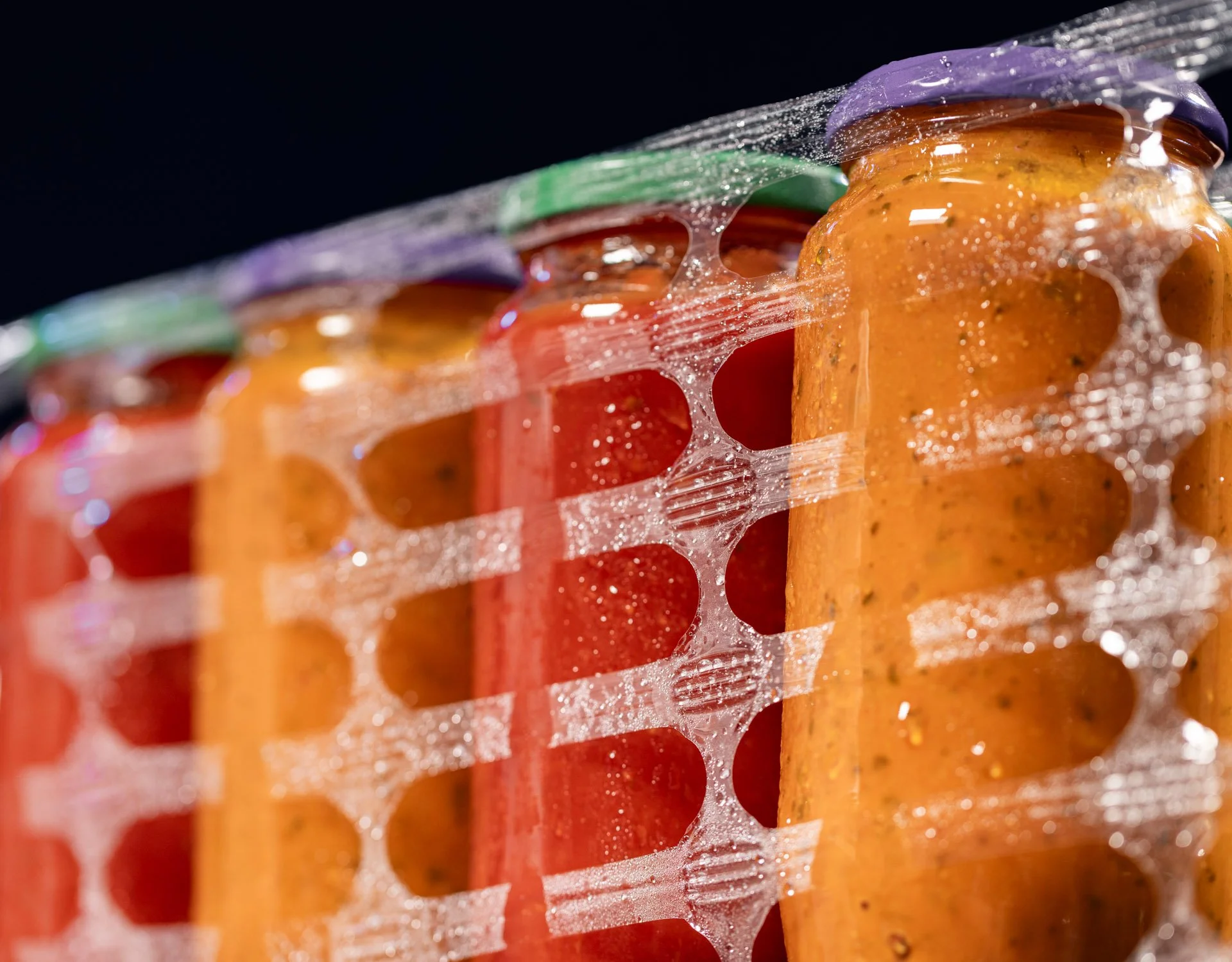
Warm Or Hot-Fill Product
Residual heat continues moving after packing. Wrapping too early with solid film can trap heat and vapour inside the unit load.
Chilled Pull-Down
Perforated film can reduce the external airflow barrier, but cold air still needs an open route between cases and into the pallet core.
Blast Freezing
Measure edge and core temperatures over time. A faster outside temperature is not proof that the complete pallet has reached target.
Measure The Temperature Curve, Not The Appearance
A credible cooling trial records the same product, pallet configuration, starting temperature, store position, airflow conditions and sensor positions for both the existing and proposed wrapping systems.
Breathability Is Useless If The Pallet Is Unstable
A wrapped pallet must behave as a unit load. Perforated film must therefore be assessed for usable containment force, force distribution, base anchoring, load movement and consistency across the real wrap programme.
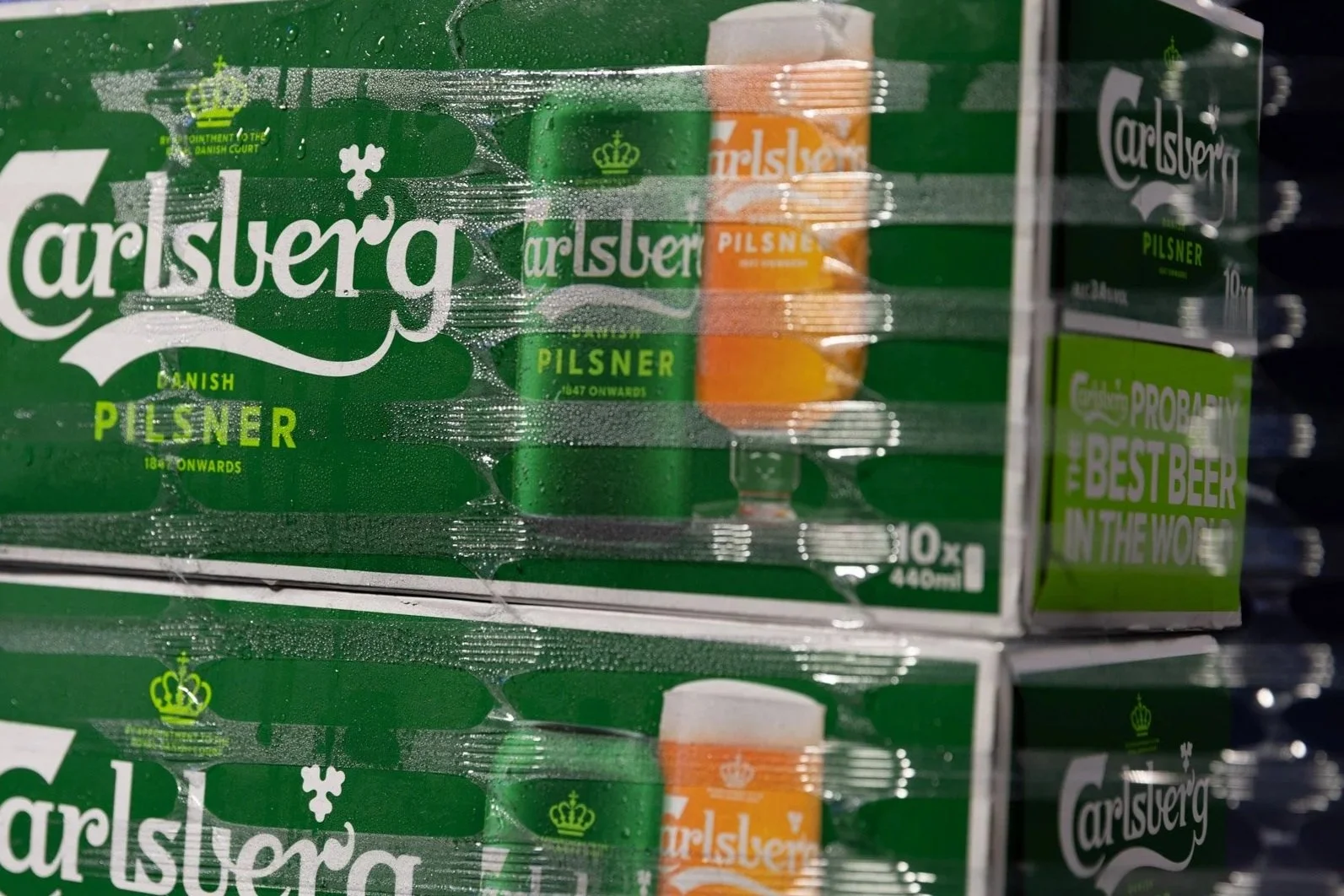
Containment Is A System Output
Roll thickness does not equal pallet stability. Containment is produced by the interaction between film structure, stretch, recovery, secondary tension, revolutions, overlap, pallet geometry and the condition of the wrapping machine.
- Base anchoring: the load must be connected to the pallet without crushing lower packs or leaving an unstable hinge.
- Force distribution: top, middle and bottom zones may need different reinforcement depending on product movement.
- Film recovery: the applied film must retain holding force after stretching and after the load settles.
- Puncture and edge control: corners, trays, boards and pallet overhang can initiate damage at openings or film edges.
- Dynamic validation: forklift handling, braking, cornering, vibration and customer handling expose weaknesses that are invisible beside the wrapper.
| Observed Result | Possible Cause | Correct Technical Response |
|---|---|---|
| Film looks tight but the load moves | Force is not distributed correctly, base lock is weak, product is settling or the machine is not producing the expected stretch. | Measure containment by zone, inspect pallet build and verify the wrapper rather than adding revolutions blindly. |
| Perforated film tears on corners | Sharp edges, damaged roll edge, excessive tension, poor film path, incorrect pre-stretch or openings aligned with high-stress points. | Inspect the load and carriage, reduce the initiating fault and select a more appropriate construction or pattern if required. |
| More wraps improve stability but destroy airflow | Overlap is closing the openings or the selected film is relying on excessive application to achieve containment. | Re-engineer the film structure and wrap programme so containment is created without sealing the pallet again. |
| Results vary by shift | Hand application, operator technique, roll storage, machine drift or programme changes are creating inconsistent force. | Standardise the process, record approved settings and confirm roll and machine condition. |
Hand Wrap And Machine Film Are Different Operating Systems
A material that works during a careful hand trial is not automatically suitable for a production wrapper. The application method determines stretch input, tension consistency, overlap, cycle speed, handling and the way openings behave after wrapping.
Flexible, But Operator-Dependent
Hand-applied breathable pallet wrap can suit low-volume operations, irregular loads, horticulture, top-up wrapping and trials. It gives the operator direct control but also introduces variation in tension, overlap, walking path and the amount of film applied.
- Confirm roll weight and handling suitability.
- Standardise the starting point and wrap path.
- Control overlap so openings are not unintentionally closed.
- Measure pallets per roll or applied grams rather than relying on operator judgement.
- Check that operators are not adding extra film to create confidence.
Repeatable When The Wrapper Is Correct
Machine application can provide more consistent stretch and containment, but perforated film exposes carriage and setup faults quickly. Damaged rollers, excessive pre-stretch, poor threading, carriage drag or aggressive acceleration can initiate tearing or distort the open pattern.
- Inspect rollers, bearings, film path and carriage resistance.
- Verify actual pre-stretch rather than relying only on a display setting.
- Set secondary tension around the load, film construction and corner profile.
- Use an approved top, middle and bottom wrap programme.
- Lock settings after validation and record the approved film specification.
Film Loading
Correct orientation, undamaged edges and a clean film path prevent avoidable breaks before the film reaches the pallet.
Stretch & Tension
Pre-stretch and secondary tension must work within the film’s design window without collapsing openings or initiating tears.
Wrap Pattern
Overlap, carriage speed and revolutions decide where force is placed and how much of the open pattern remains available.
Machine Condition
A worn wrapper can increase film use, reduce containment and make a suitable material appear unreliable.
Select Perforated Wrap By Operational Problem, Not Industry Label
Two factories in the same sector can need completely different films. The stronger selection method is to define the problem the wrapped pallet creates or must avoid.
Residual Heat After Production
Hot-fill cans, sauces, beverages, bakery products and other warm goods may continue releasing heat after palletisation.
What the system must doRelease heat without creating an unstable pallet or forcing operators to delay wrapping and despatch.
Slow Chilling Or Freezing
Solid film can restrict external airflow around chilled or frozen loads and increase the difference between pallet edge and core.
What the system must doSupport a more open cooling route while retaining the load through cold-store and transport handling.
Moisture-Sensitive Packaging
Condensation can soften corrugated cases, damage labels, affect barcodes, stain packs or reduce stacking strength.
What the system must doReduce trapped moisture conditions and protect the operational integrity of the secondary packaging.
Fresh Product Respiration
Fresh produce, fruit, vegetables, flowers and plants can continue exchanging heat, moisture and gases after packing.
What the system must doAllow the pallet to breathe without losing the containment needed for handling and distribution.
Process Access Through The Load
Some operations need air, gas or a validated process medium to pass through the pallet after wrapping.
What the system must doMaintain pallet integrity while leaving a controlled route through the film. Site-specific process validation remains essential.
Manual Ventilation Workarounds
Sites may use corner boards, spacers, hand-cut holes, partial wrapping, waiting periods or repeated wrapping to avoid sealing the load.
What the system must doCreate one repeatable wrapping process and remove labour that exists only because the current film blocks airflow.
Common UK Sectors
Applications are regularly found in fresh produce, fruit and vegetables, horticulture, chilled foods, frozen products, dairy, cheese, ready meals, sauces, pickles, beverages, cans, bakery, corrugated packaging, pet food, pharmaceuticals and temperature-sensitive logistics.
Sector fit is only an initial indicator. The decision must still be based on product condition, packaging route, load stability, machinery and the real journey after wrapping.
When Perforated Pallet Wrap Is Not The Right Answer
Technical authority includes saying no. A breathable film should not be recommended where it creates a greater operational risk than the airflow problem it is intended to solve.
Price Per Roll Is Not The Cost Of Wrapping A Pallet
Perforated pallet wrap should be compared using real yield and operational output. A lower roll price can become the more expensive system if it uses more film, produces fewer pallets, adds labour, slows cooling or creates rework.
Count only pallets completed to the approved standard. Film breaks, failed pallets, trial waste and partial rolls should not be hidden.
Weighing the applied film exposes the real material input and allows different roll lengths, gauges and constructions to be compared fairly.
Add The Costs That Sit Outside The Roll
The strongest commercial comparison includes material, labour, throughput, cooling, product condition and the cost of failure.
A Proper Perforated Pallet Wrap Trial Has A Written Method
A roll placed on a machine for ten minutes is a product demonstration. A technical trial establishes a baseline, controls the variables, measures the result and confirms that the pallet still works after it leaves the wrapper.
Define The Failure
State the problem precisely: condensation, slow pull-down, labour, rewrapping, gas release, film usage, instability or a combination.
Record The Baseline
Measure current film, roll price, applied weight, pallets per roll, wrap programme, cycle time, temperatures and observed failures.
Map The Load
Document product condition, pack type, carton vents, pallet pattern, weight, height, corners, overhang and transport route.
Inspect The Wrapper
Check film path, rollers, pre-stretch, tension control, carriage movement, settings and programme before judging the film.
Select The Trial Spec
Match the initial open area, reinforcement, format and roll construction to the defined airflow and containment requirement.
Run Controlled Pallets
Use repeatable loads and record every setting. Do not change product, pallet pattern and film at the same time without noting it.
Validate The Journey
Observe cooling, storage, internal movement, transport, customer receipt and any process access the film is intended to support.
Lock The Standard
Approve the film code, machine programme, wrap pattern, acceptance limits, purchasing description and change-control process.
| Trial Metric | How To Measure It | Why It Matters |
|---|---|---|
| Applied film weight | Remove the film from a representative completed pallet and weigh it accurately. | Creates a comparable material baseline independent of roll length or marketing gauge. |
| Cost per pallet | Use measured roll yield or applied weight and cost per kilogram. | Shows the actual commercial output instead of the visible purchase price. |
| Temperature pull-down | Use repeatable sensor positions at the edge and core over the same time period. | Confirms whether ventilation is changing the full pallet, not just the outside layer. |
| Condensation condition | Use agreed inspection points, photographs, packaging condition and humidity or temperature data where available. | Prevents subjective “looks better” conclusions. |
| Containment and movement | Measure force where appropriate and validate through normal handling or an approved stability method. | Ensures airflow has not been bought at the expense of transport safety. |
| Cycle time and labour | Time wrapping, waiting, roll changes, handling, cutting, rewrapping and operator interventions. | Captures savings or penalties outside the material itself. |
| Film breaks and consistency | Record breaks, causes, roll changes, setting changes and results by shift. | Separates a repeatable production solution from a one-off successful pallet. |
Perforated Pallet Wrap Troubleshooting Guide
Most failures sit across several variables. Use the table as a diagnostic starting point, not as a substitute for inspecting the pallet, film and wrapper together.
| Symptom | Likely Cause Areas | First Checks |
|---|---|---|
| Film repeatedly tears at the openings | Excess tension, aggressive pre-stretch, sharp corners, damaged roll edge, poor carriage path, unsuitable aperture geometry or cold/brittle conditions. | Reduce the initiating stress, inspect rollers and edges, confirm film orientation and compare failure location across several rolls. |
| Openings close after wrapping | Excess overlap, excessive stretch, neck-down, pattern misalignment or too many revolutions. | Inspect the applied pallet, not the roll. Measure overlap and adjust the wrap programme or film design. |
| Pallet remains hot or cools slowly | Closed carton route, blocked pallet core, poor fan exposure, store position, insufficient dwell time or inadequate open area. | Map the complete airflow route and compare edge/core temperatures under controlled conditions. |
| Condensation continues | High humidity, severe temperature difference, moisture source inside the pack, wrap timing, packaging absorbency or insufficient ventilation. | Record product, air and surface conditions. Review when and where condensation forms rather than assuming more holes will solve it. |
| Load shifts after wrapping | Weak base lock, poor containment distribution, product settlement, low film recovery, machine drift or unstable pallet build. | Measure and compare containment zones, inspect the pallet base and verify machine output. |
| Film usage increases | Operators compensating for uncertainty, extra revolutions, low roll yield, frequent breaks, incorrect programme or poor machine stretch. | Weigh applied film, record pallets per roll and inspect why extra material is being added. |
| Results differ between shifts | Manual technique, unlocked programmes, roll handling, machine condition, different pallet builds or unrecorded adjustments. | Standardise the load and programme, identify what changes by shift and use a controlled reference pallet. |
| Film tracks badly or telescopes | Roll damage, storage, incorrect core fit, carriage alignment, uneven unwind or web-edge damage. | Inspect the unused roll, core seating, alignment and storage condition before changing tension. |
| Lower cartons crush | Excess local force, poor pallet build, weak corrugated, too many base wraps or high tension in the wrong zone. | Review force distribution and packaging compression rather than reducing all containment indiscriminately. |
| Successful trial fails in transport | Trial did not reproduce real handling, vibration, braking, temperature, dwell or customer movement. | Extend validation beyond the wrapper and reproduce the actual supply-chain journey. |
The Perforated Pallet Wrap Buying Checklist
Use these questions when comparing a new specification, supplier proposal or alternative roll. A meaningful comparison must protect the operational result, not only the purchase price.
ExcelAir Perforated Pallet Wrap
ExcelAir is Excelerate’s range of perforated, ventilated and breathable pallet wrap for operations where airflow and containment must work together.
The range includes hand and machine formats, bespoke specifications and reinforced structures developed around real pallet, machinery and process requirements. The objective is not to sell “film with holes”. It is to create a controlled wrapping system that solves the operational problem at the lowest sensible cost per pallet.
Excelerate can review the existing process, benchmark film usage, inspect the wrapping machine, select a trial specification and validate performance through the customer’s real storage and despatch operation.

Related Excelerate Technical Guidance
Perforated film sits inside a wider pallet-wrapping system. Continue into the specialist pages below for deeper guidance on each variable.
Perforated Pallet Wrap Technical FAQs
Clear answers to the questions most often raised by operations, engineering, quality and procurement teams.
What is perforated pallet wrap?
Are perforated, ventilated and breathable pallet wrap the same thing?
Does perforated pallet wrap stop condensation?
Can perforated stretch film improve cooling or freezing?
Is perforated pallet wrap weaker than solid stretch film?
Can perforated pallet wrap run on a pallet wrapping machine?
What open-area percentage should we specify?
Can perforated wrap secure heavy or unstable pallets?
How should perforated pallet wrap be compared commercially?
When should perforated pallet wrap not be used?
Is perforated pallet wrap recyclable?
Do we need a site trial before changing specification?
Do Not Guess At Airflow Or Pallet Stability
Excelerate can review the current wrapping process, identify where heat or moisture is being trapped, assess machinery and containment, benchmark cost per pallet and run a controlled ExcelAir trial through the real operation.
The outcome should be a documented wrapping standard: the right film, applied through the right programme, delivering measurable airflow, containment and commercial performance.
This guide provides general technical and operational information. Performance depends on the product, packaging, pallet build, wrapping machinery, film specification, environment and supply-chain conditions. Any proposed change should be validated for the specific site, load and process before full implementation.