

Why Is My Pallet Wrapper Using Too Much Stretch Film?
You're replacing rolls more often. Film costs have increased. Operators have started turning the machine down to compensate.
It usually isn't the film, unless your supplier is shorting your rolls.
It could be the stretch wrapper.
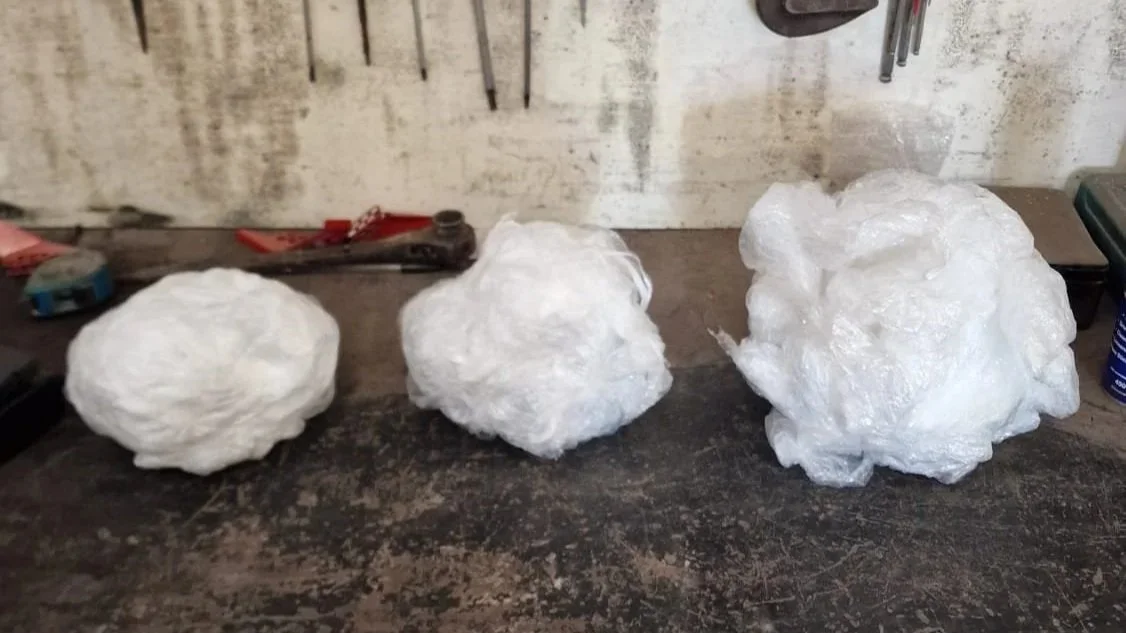
Film reduction through a serviced, fully-functioning pallet wrapping machine
Every extra gram adds up
Most manufacturers focus on the cost per roll.
Very few look at how much film is actually being applied to each pallet.
The difference between a well-optimised pallet wrapping machine and one that's gradually drifted out of specification can be enormous.
An extra 100g of film per pallet doesn't sound like much.
Across hundreds or thousands of pallets every week, it quickly becomes one of the biggest hidden costs in your operation.
We've seen machines using 30%, 40% and sometimes over 50% more film than necessary, simply because they haven't been inspected or optimised.
Before changing film supplier, check these first
1. The pre-stretch system isn't doing its job
This is by far the most common issue we see.
The whole purpose of a pre-stretch carriage is to stretch the film before it reaches the pallet.
If worn rollers, damaged bearings, incorrect gearing or poor settings prevent that from happening, the machine compensates by applying significantly more film.
You pay for extra plastic whilst achieving exactly the same load stability.
2. The containment force has drifted
Many wrappers gradually become "turned up."
Operators increase wrap counts after a load falls.
Someone increases film tension.
Nobody ever resets it.
Months later the machine is wrapping every pallet with several unnecessary revolutions.
The pallet is secure.
You're just using far more material than needed.
3. Worn carriage rollers
Film should travel smoothly through the carriage.
Worn rollers increase friction.
The film stretches inconsistently, can neck down or even snap, leading operators to reduce pre-stretch and increase wrap cycles.
The result?
Higher film consumption.
4. Incorrect film specification
Not every stretch film behaves the same.
Running an unsuitable film often leads to:
more top wraps
more bottom wraps
extra revolutions
reduced pre-stretch
Changing to a genuinely high-performance film often allows fewer wraps whilst improving load stability.
5. Nobody has looked at the machine for years
This is surprisingly common.
The wrapper still works.
So nobody touches it.
Meanwhile:
chains wear
sensors drift
rollers deteriorate
settings change
pre-stretch performance reduces
None of these stop production.
They simply increase operating costs every single day.
A pallet wrapper doesn't have to break to cost money
Many customers only call an engineer when production stops.
By then the problem is obvious.
The expensive machines are often the ones that never actually break.
They continue wrapping pallets perfectly...
...just using significantly more film than they should.
We always start with the process
When we visit site, we don't simply replace parts.
We measure how the machine is performing.
We review:
film usage per pallet
pre-stretch performance
containment force
wrap pattern
carriage condition
machine settings
overall pallet stability
Only then do we recommend changes.
Sometimes it's a service.
Sometimes it's a settings adjustment.
Sometimes changing the film delivers the biggest saving.
The result
For many manufacturers, reducing stretch film usage by even 10% delivers a return far greater than the cost of servicing the machine.
For others, the savings are substantially higher.
The key is understanding why the machine is using so much film before assuming the answer is simply to buy a cheaper roll.
Is your pallet wrapper using more film than it should?
If you're replacing rolls more frequently, film costs have steadily increased or you've never reviewed your machine's performance, we'd be happy to help.
Our engineers support pallet wrappers across the UK, helping manufacturers reduce film usage, improve load stability and keep production moving.
Interested in servicing? Visit our machinery servicing page.
Want to know more about pallet wrap optimisation? Visit this page.
