

Pallet Wrapper Buying Guide UK
Choosing a pallet wrapping machine is not about buying the cheapest wrapper. The right machine depends on pallet volume, load stability, film usage, floor layout, operator involvement, product type and how much control the operation needs over containment force.
This guide explains the difference between turntable pallet wrappers, robot pallet wrappers, rotary arm wrappers and fully automatic pallet wrapping lines so you can choose the correct system for your site.
The Short Version: Match The Machine To The Load, Not The Catalogue
A pallet wrapper is part of a system. The machine, stretch film, pre-stretch carriage, wrap programme, pallet weight, load profile and operator process all affect the final wrapped pallet.
A basic turntable can be the correct answer for a clean, stable, low-volume warehouse. A robot wrapper may be better where pallets are heavy, oversized or wrapped in multiple areas. A rotary arm or fully automatic line may be needed where the load cannot rotate or where throughput is the priority.
Turntable Wrappers
Turntable pallet wrappers are the most common wrapping solution in UK warehouses. They suit operations with a dedicated wrapping area, consistent pallet sizes and loads that can safely rotate during wrapping. Modern power pre-stretch systems can significantly reduce film usage while improving containment force.
Robot Wrappers
Robot pallet wrappers wrap the load by travelling around the pallet instead of rotating it. They are ideal for oversized, heavy or awkward pallets and can reduce double handling by bringing the wrapper to the pallet rather than the pallet to the wrapper.
Rotary Arm Wrappers
Rotary arm pallet wrappers keep the pallet stationary while the wrapping arm rotates around the load. They are often used for unstable, lightweight, fragile or high-throughput loads where rotating the pallet could compromise stability.
Automatic Lines
Automatic pallet wrapping systems integrate into conveyorised production and dispatch environments. They reduce operator involvement and are typically used where throughput, consistency and labour efficiency justify a higher level of automation.
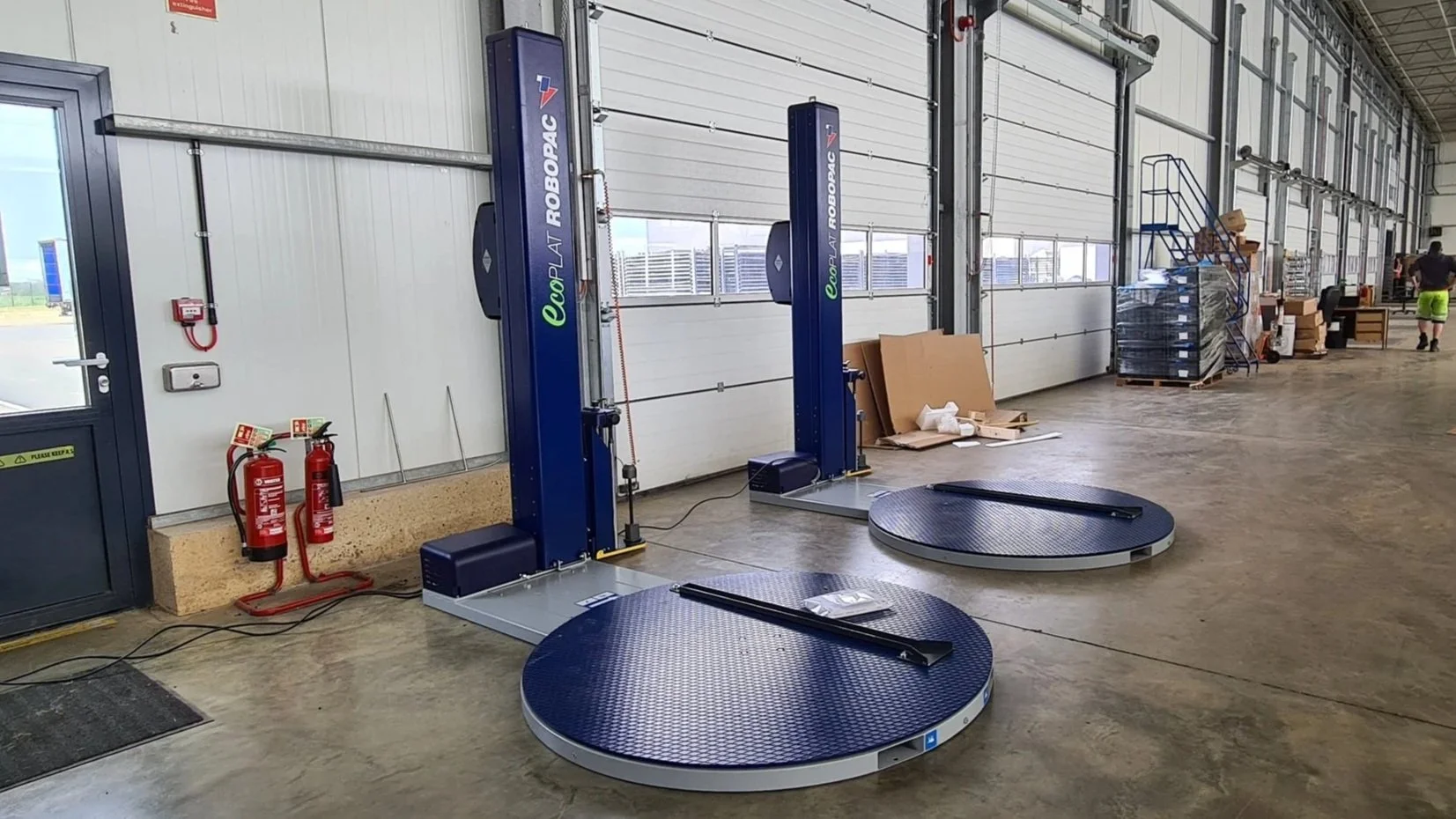
Turntable Pallet Wrappers
Turntable pallet wrappers rotate the pallet on a circular platform while the film carriage travels vertically. They are one of the most common options for warehouses, manufacturing sites and dispatch areas because they are simple, compact and cost-effective.
They work best where pallets are reasonably stable, standard in size and can safely rotate during wrapping. Low-profile turntables can be loaded by pallet truck, while higher-spec models may include power pre-stretch, programmable wrap cycles and top sheet options.
- ✓ Fixed wrapping point
- ✓ Standard UK and Euro pallets
- ✓ Lower to medium volume
- ✓ Lower machinery budget
- ✓ Strong option with power pre-stretch
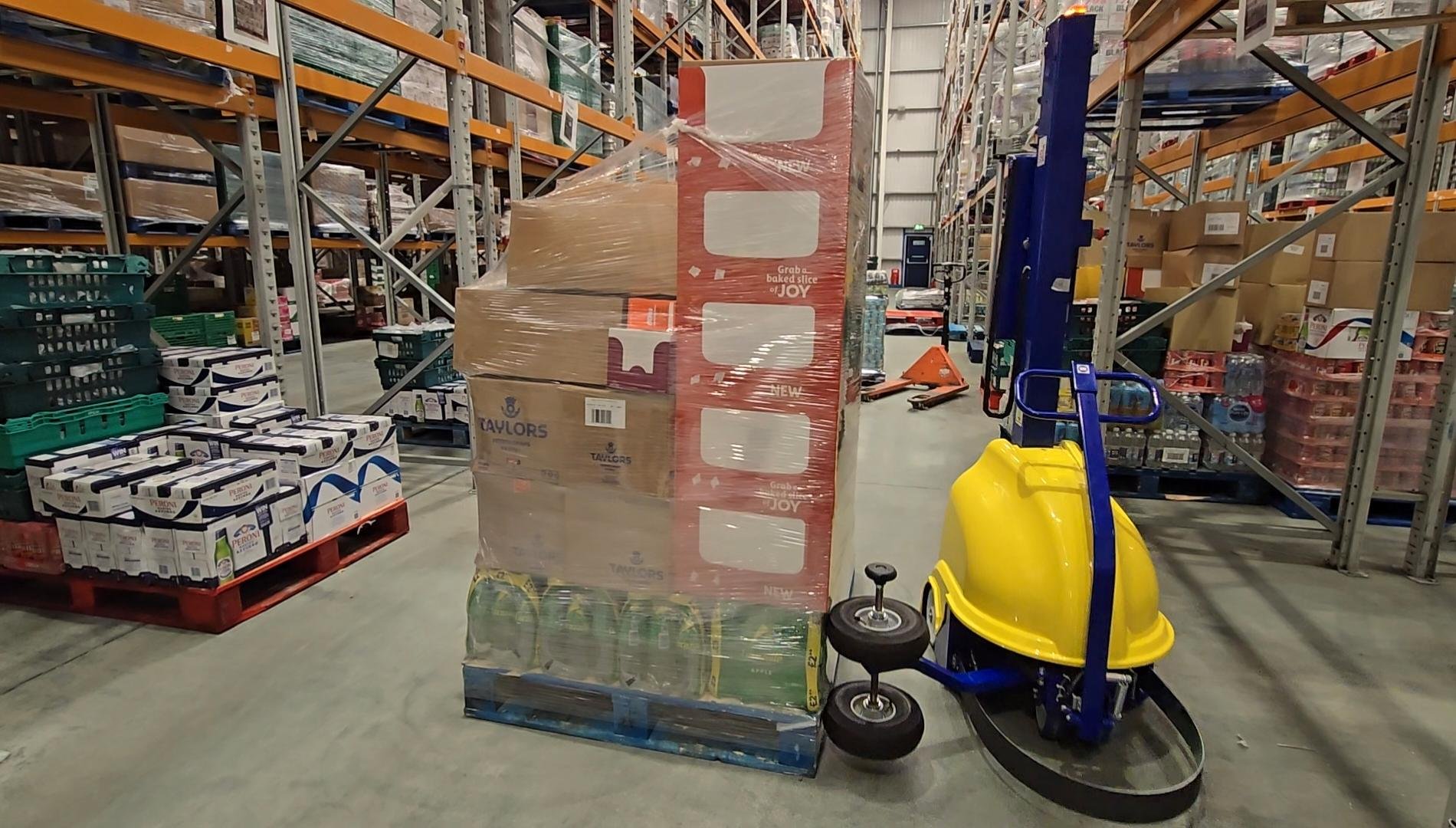
Robot Pallet Wrappers
Robot pallet wrappers travel around the pallet instead of rotating the load. This makes them useful where pallets are too large, heavy, unstable or awkward for a turntable. They are also useful where pallets are built in different areas and moving every load to a fixed wrapper creates unnecessary handling.
A robot wrapper is often the better commercial choice when space, pallet movement, mixed load sizes or warehouse flow are the real problems. It brings the wrapper to the pallet instead of forcing the pallet to the wrapper.
- ✓ Mobile wrapping
- ✓ Oversized pallets
- ✓ Heavy or unstable loads
- ✓ Multiple wrapping areas
- ✓ Less movement of built pallets
Rotary Arm Wrappers & Fully Automatic Lines
Once volume, instability or production flow becomes more serious, the question often moves beyond robot vs turntable. Rotary arm machines and automatic pallet wrapping lines exist for operations where the pallet should not be rotated or where wrapping has to become part of a controlled end-of-line process.
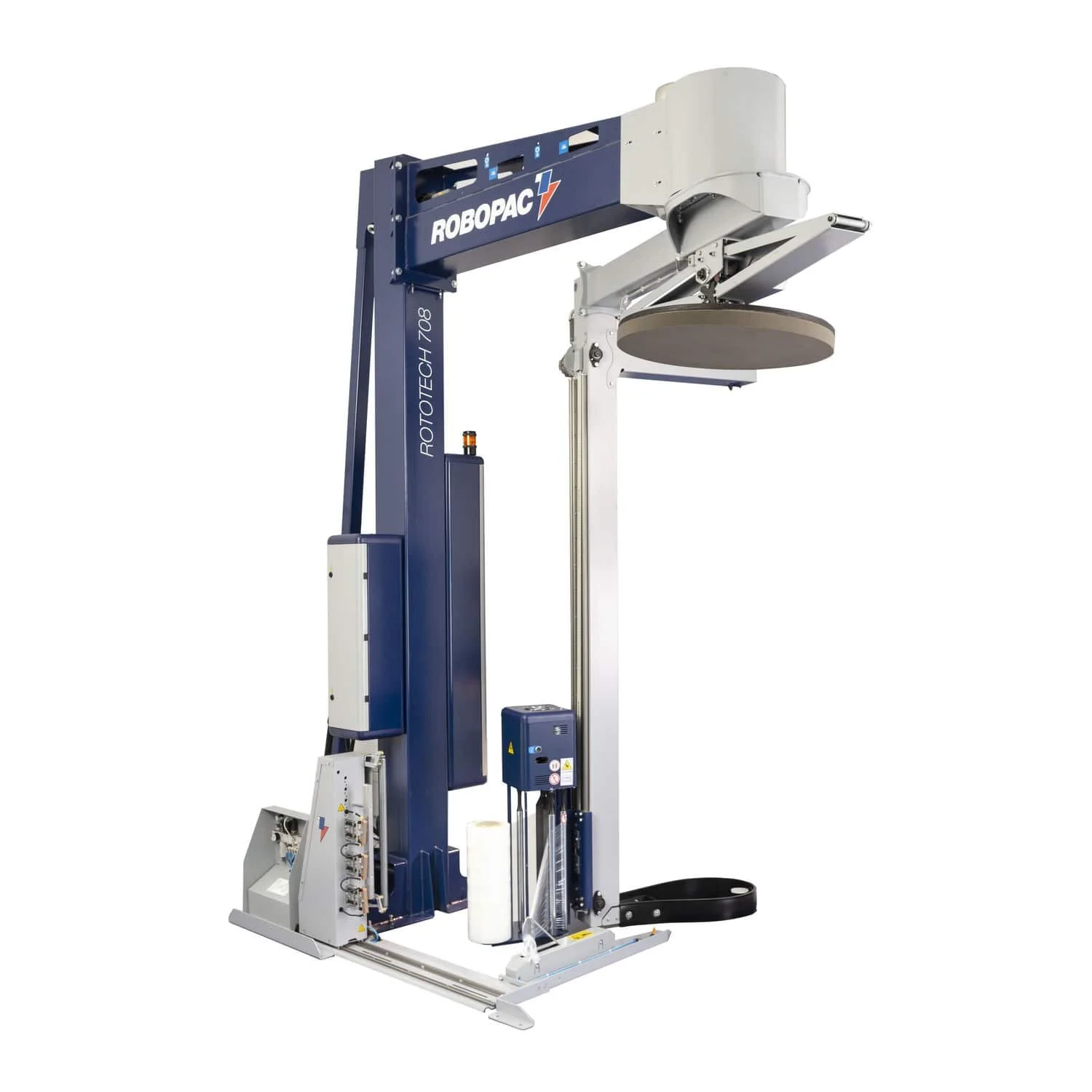
Rotary Arm Pallet Wrappers
A rotary arm wrapper keeps the pallet stationary while the arm rotates around the load. This is valuable for unstable, fragile, tall, very heavy or lightweight loads that may move, collapse or distort if rotated on a turntable.
Rotary arm systems are often used in food and drink, manufacturing, building products, logistics and high-volume dispatch environments where stability and repeatability matter.
Best where the load must stay still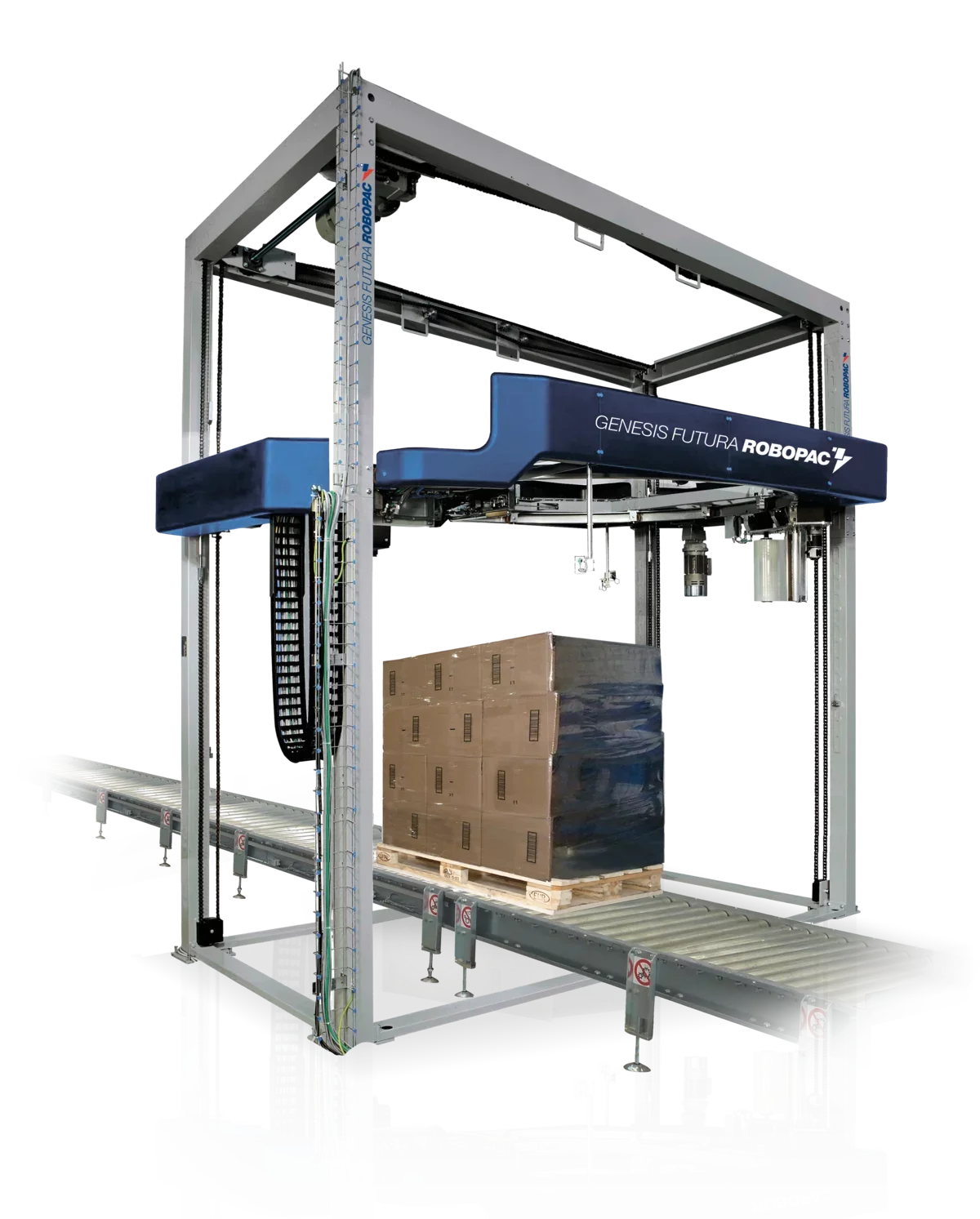
Automatic Pallet Wrapping Lines
Fully automatic pallet wrapping systems are normally conveyorised and designed to reduce operator involvement. They may include automatic film clamp, cut and wipe systems, powered conveyors, safety guarding, top sheet systems and integration into existing production flow.
These systems suit sites where wrapping is no longer a manual warehouse task but part of a production or distribution process.
Best for high-throughput line integrationPallet Wrapper Types Compared
The best pallet wrapper is the one that fits the operation. A machine that looks cheaper on the quote can become expensive if it increases film use, operator handling, damaged pallets or downtime.
| Machine Type | Best For | Not Ideal For | Typical Budget Position |
|---|---|---|---|
| Core-brake turntable wrapper | Low-volume wrapping, stable pallets, simple applications and entry-level automation. | Lightweight or unstable loads where film pull may move the pallet. | Lowest machinery cost, but can have higher film cost in use. |
| Power pre-stretch turntable wrapper | Regular pallet wrapping, better film yield, improved containment and lower cost per pallet. | Oversized or highly unstable pallets that should not rotate. | Mid-range investment with stronger long-term savings potential. |
| Robot pallet wrapper | Long pallets that won't fit on a turntable, awkward loads, small wrapping areas and in-situ wrapping. | Poor floor conditions or sites needing fully conveyorised automation. | Mid-range investment |
| Rotary arm wrapper | Fragile, unstable, tall, heavy or high-throughput loads where the pallet must remain still. | Very low-volume operations where a simpler turntable would be enough. | Higher investment, justified by stability, speed and process control. |
| Fully automatic pallet wrapping line | Production lines, conveyorised dispatch, high throughput and automated warehouses. | Low-volume sites or sites without space, guarding or layout for automation. | Highest investment, usually justified by labour reduction and throughput. |
| Orbital or horizontal wrapper | Long products, doors, panels, timber, extrusions and items that are not standard pallet loads. | Standard pallet wrapping where a vertical wrapper is more suitable. | Specialist investment based on product format. |
Budget Guide: What Should You Expect To Spend?
Pallet wrapper pricing changes by brand, carriage type, automation level, installation, guarding, conveyor integration and service support. The figures below are realistic buying bands, not fixed quotations.
Entry-Level Semi-Automatic £3,000-£4,000
Basic turntable wrappers can start from a few thousand pounds. These are suitable where pallet volumes are modest and the operation mainly needs to move away from hand wrapping.
Typical fit: 5-20 pallets per day, stable loads, simple dispatch.
Mid-Range PPS Wrappers £5,000-£8,000
Powered pre-stretch turntables and stronger robot wrappers cost more upfront but can reduce film use and improve repeatability.
Typical fit: regular daily wrapping, cost-per-pallet focus, better containment control.
High-End Automation £10,000-£100,000
Rotary arm wrappers and automatic lines require a larger investment but can reduce operator input, improve throughput and support line-level production flow.
Typical fit: high-volume sites, production lines, unstable or fragile loads.
Do not judge a pallet wrapper purely by purchase price. A cheaper machine that uses more film, needs more operator intervention or produces weaker pallets can cost more than a better-specified machine within months.
What Suits Different Products & Industries?
Industry matters because different products fail in different ways. A chilled food pallet has different risks to a building products pallet. A contract packing operation has different flow problems to a manufacturing line.
| Industry / Product Type | Typical Wrapping Risk | Likely Machine Fit | Key Consideration |
|---|---|---|---|
| Food & drink | Mixed pallet profiles, chilled loads, condensation, hygiene and dispatch speed. | Turntable, robot or automatic line depending on volume. | Film choice, airflow, condensation control and load stability. |
| Chilled distribution | Temperature movement, trapped heat, moisture and unstable mixed loads. | Robot wrappers, turntables or automatic systems depending on flow. | Consider perforated pallet wrap where airflow and cooling matter. |
| Contract packing & fulfilment | Multiple pallet build points, peaks, agency labour and changing product formats. | Robot pallet wrappers or flexible turntable systems. | Wrapping at point of build can reduce double handling. |
| Manufacturing | Repeatable load formats, line speed and downtime sensitivity. | Power pre-stretch turntables, rotary arm wrappers or automatic lines. | Machine reliability, servicing and programme consistency. |
| Building products | Heavy loads, sharp edges, unstable stacks and outdoor handling. | Robot wrappers, rotary arm wrappers or heavy-duty turntables. | Puncture resistance, containment force and load weight. |
| Horticulture | Danish trolleys, plants, airflow requirements and irregular shapes. | Specialist wrapping approach depending on trolley or pallet format. | Air movement and product sensitivity matter more than generic stretch. |
| Pharmaceutical & healthcare | Consistency, repeatability, documentation and clean process control. | Power pre-stretch turntables or automatic systems. | Repeatable settings, stable loads and controlled wrapping process. |
| Panels, doors, timber and long products | Non-standard shapes that do not suit normal vertical pallet wrapping. | Orbital or horizontal wrappers. | Product geometry decides the machine type. |
The Hidden Cost Most Buyers Miss: Film Consumption
The machine cost is visible. Film cost is often invisible until the operation starts wasting material every day.
The wrong carriage, wrong film, wrong wrap programme or poor machine condition can increase film use, reduce containment force and create unstable pallets. That is why cost per pallet matters more than roll price or machine price alone.
Why Cheap Machines Can Become Expensive
Basic machines often rely more heavily on brake tension and pallet resistance. If the pallet is light or unstable, operators may reduce tension to keep the machine running. The pallet then leaves the machine loosely wrapped.
The usual reaction is to add more revolutions. That uses more film without necessarily improving load stability.
- ✓ More film used per pallet
- ✓ Poor containment force
- ✓ More operator adjustment
- ✓ Greater risk of transport damage
Why Better Specification Can Pay Back
A powered pre-stretch machine can produce more usable film from the roll when correctly set up. That can reduce film use, improve consistency and create a lower cost per pallet.
This is where machine choice, film quality and service support need to be assessed together.
- ✓ Better film yield
- ✓ More repeatable containment
- ✓ Lower roll changes
- ✓ Stronger operational control
Robot vs Turntable: The Decision Point
Many buyers start by asking whether they should buy a robot pallet wrapper or a turntable pallet wrapper. The real question is whether the pallet should move, or whether the wrapper should move.
Choose A Turntable If...
You have a fixed wrapping area, standard pallets, stable loads and operators can bring pallets to the machine without creating handling problems.
- ✓ Standard pallet sizes
- ✓ Fixed dispatch area
- ✓ Lower footprint requirement
- ✓ Controlled daily volume
Choose A Robot If...
You build pallets in different areas, handle large or heavy loads, or want to wrap pallets without moving them to a fixed machine.
- ✓ Multiple wrapping locations
- ✓ Oversized pallets
- ✓ Heavy loads
- ✓ Reduced double handling
Questions To Ask Before Buying A Pallet Wrapper
Before choosing a machine, get the operational facts clear. This prevents buying a wrapper that looks right on paper but fails on the actual site.
Volume & Throughput
How many pallets are wrapped per day? Is the volume steady, seasonal or peak-driven?
Load Stability
Are pallets uniform, light, unstable, tall, mixed, sharp-edged or fragile?
Wrapping Location
Are pallets built in one dispatch area or across multiple warehouse zones?
Film Usage
Do you know current film grams per pallet, roll usage and cost per pallet?
Product Sensitivity
Do products need airflow, cooling, moisture control, gentle wrapping or high containment?
Servicing & Downtime
Who will support the machine when it faults, needs parts or requires setup changes?
Common Buying Mistakes
Most pallet wrapper mistakes are not caused by buying a bad machine. They are caused by buying the wrong machine for the load, site layout or wrapping objective.
Buying On Machine Price Alone
The lowest upfront cost can become expensive if the machine uses more film, needs more operator handling or cannot produce consistent load stability.
Ignoring Film Performance
A pallet wrapper does not work in isolation. Film stretch, puncture resistance, roll length, pre-stretch and containment force all affect real performance.
Choosing A Robot For The Wrong Reason
Robot wrappers are powerful when mobility matters. If every pallet is wrapped in one fixed area, a turntable may be simpler and more efficient.
Choosing A Turntable For Unstable Loads
If the load cannot safely rotate, a turntable may create instability. Robot or rotary arm systems may be better.
Forgetting Servicing
Machines need support. Worn rollers, sensors, belts, film carriages and poor settings can ruin performance even on a good wrapper.
Not Measuring Cost Per Pallet
Roll price is not the same as cost per pallet. The correct machine and film setup should be judged by applied film weight, stability and waste reduction.
Related Pallet Wrapping Guides
Robot Pallet Wrappers
Mobile pallet wrapping machines for oversized, heavy, awkward or multi-location wrapping environments.
View robot wrapper guide →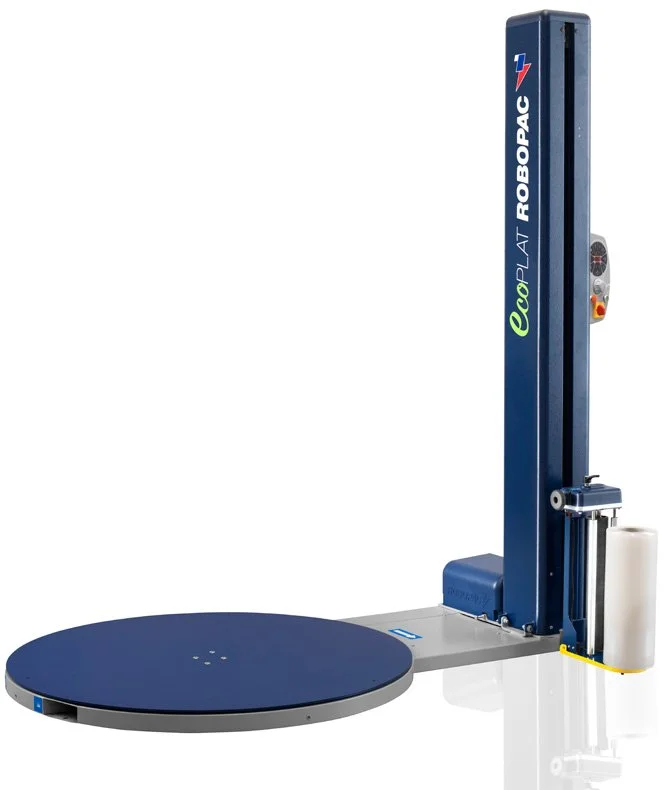
Turntable Pallet Wrappers
Compare core-brake, tension-stretch and power pre-stretch turntable pallet wrapping systems.
View turntable guide →
Load Stability
Understand containment force, film behaviour, wrap patterns and machine setup.
View load stability guide →
Robot vs Turntable
Compare the two most common pallet wrapper choices by layout, load type and operational flow.
Read comparison →
Pallet Wrap Optimisation
Reduce film waste, improve containment and lower the real cost per pallet wrapped.
View optimisation guide →
Machinery Servicing
Support for pallet wrapper servicing, repairs, fault diagnosis and performance optimisation.
View servicing support →FAQ - Pallet Wrapper Buying Guide
Quick answers to common questions about buying pallet wrapping machines, robot wrappers, turntables, rotary arm wrappers and automatic systems.
What type of pallet wrapper should I buy?
What is the difference between a robot pallet wrapper and a turntable pallet wrapper?
When should I use a rotary arm pallet wrapper?
How much does a pallet wrapping machine cost?
Is a robot pallet wrapper better than a turntable pallet wrapper?
What industries use pallet wrapping machines?
The Right Pallet Wrapper Is An Operational Decision
A pallet wrapping machine should not be chosen from a catalogue alone. It should be matched to pallet volume, product type, load stability, floor layout, film usage, operator process and long-term servicing requirements.
Excelerate supplies, installs, optimises and services pallet wrapping machines across the UK, with support for film selection, machine setup, load stability and cost-per-pallet reduction.