

Rotary Arm Pallet Wrappers For Unstable, Heavy & High-Throughput Loads
Rotary arm pallet wrappers keep the pallet stationary while the wrapping arm rotates around the load. This makes them a strong choice for unstable, fragile, lightweight, tall, heavy or high-throughput pallet wrapping applications.
Excelerate supplies and supports rotary arm stretch wrapping machines across the UK, helping sites improve load stability, reduce operator involvement and bring more control to demanding end-of-line packaging environments.
- ✓ Stationary pallet wrapping
- ✓ Unstable load support
- ✓ High-throughput applications
- ✓ Conveyor line integration
- ✓ UK machinery support
What Is A Rotary Arm Pallet Wrapper?
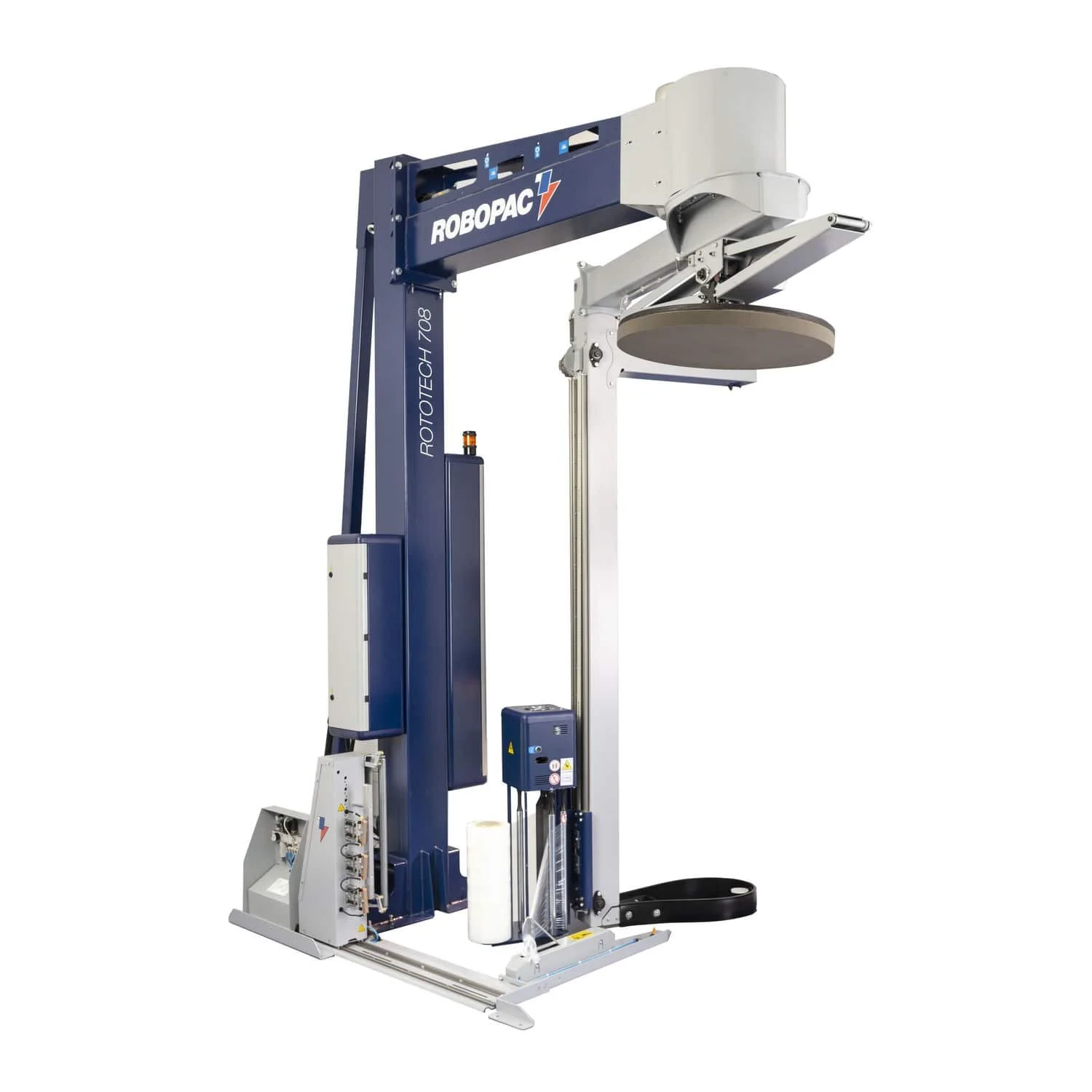
A rotary arm pallet wrapper is a stretch wrapping machine where the pallet remains still and the arm rotates around the load to apply stretch film. Unlike a turntable wrapper, the pallet is not spun during the wrapping cycle.
That difference matters. If the load is unstable, fragile, lightweight, very heavy, unusually tall or difficult to rotate safely, keeping the pallet stationary can be the correct operational decision.
The Pallet Stays Still
Rotary arm systems wrap around the pallet rather than rotating the pallet on a turntable.
Better For Unstable Loads
Loads that may lean, shift, collapse or distort during rotation can be wrapped with less movement.
Useful For High Volume
Rotary arm systems can be specified for busy despatch areas, production lines and conveyorised operations.
More Controlled Automation
They can support automatic film clamp, cut and wipe systems, conveyors and repeatable programmes.
When The Load Should Not Rotate
Some pallet loads simply do not behave well on a turntable. Tall mixed pallets, fragile products, lightweight stacks, unstable cartons, heavy industrial goods and irregular profiles can all move during rotation.
A rotary arm wrapper removes that rotation from the process. The machine wraps around the load while the pallet stays in place.
- ✓ Unstable mixed pallets
- ✓ Lightweight products
- ✓ Tall pallet loads
- ✓ Heavy industrial loads
Built For Higher Control Operations
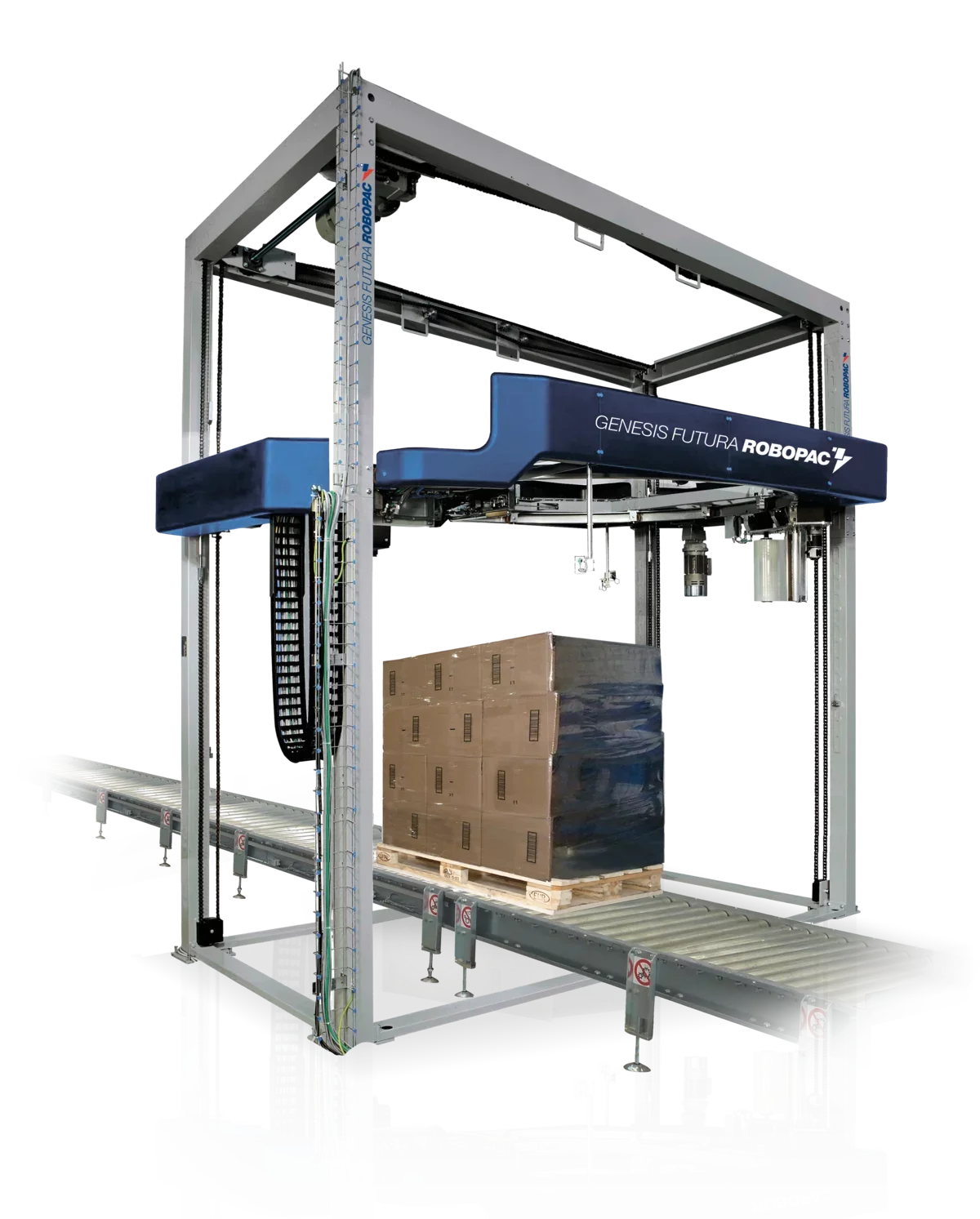
Rotary arm pallet wrappers are often considered where wrapping has become more than a basic warehouse task. They suit operations where repeatability, throughput, line integration and load protection are commercially important.
They are commonly considered in manufacturing, food production, logistics, building products, fulfilment and other environments where load stability and process consistency matter.
- ✓ Production environments
- ✓ Conveyor-fed wrapping
- ✓ Repeatable settings
- ✓ Reduced operator input
Rotary Arm vs Turntable vs Robot Wrapper
Rotary arm pallet wrappers are not automatically better than turntables or robot wrappers. They solve a different operational problem. The right choice depends on load behaviour, layout, throughput, pallet movement and budget.
| Machine Type | Best Fit | Where It Can Struggle | Excelerate View |
|---|---|---|---|
| Turntable Pallet Wrapper | Stable pallets, fixed wrapping points, lower to medium volume, standard pallet sizes. | Loads that cannot safely rotate, very unstable products, oversized loads. | Good first step into automation when pallets are stable and flow is simple. |
| Robot Pallet Wrapper | Flexible wrapping areas, oversized pallets, multiple pallet build points, reduced pallet movement. | Sites needing direct conveyor integration or fully automatic line operation. | Often the strongest choice where wrapping flexibility matters more than fixed automation. |
| Rotary Arm Pallet Wrapper | Unstable, fragile, tall, heavy or high-throughput loads where the pallet should remain stationary. | Very low volume sites where a simpler machine would be enough. | Best considered when load stability, throughput or line integration justify the investment. |
| Fully Automatic Line | Conveyorised production, automatic pallet movement, high throughput and reduced manual intervention. | Sites without suitable layout, guarding space, conveyor flow or investment case. | Correct where wrapping needs to become part of a controlled production or distribution line. |
When Should You Consider A Rotary Arm Wrapper?
Rotary arm wrappers make sense when rotating the pallet creates risk, when throughput has outgrown simpler machinery or when the wrapping process needs tighter integration into an end-of-line system.
Unstable Loads
Mixed, tall, light or fragile pallet loads can move during turntable rotation. Rotary arm wrapping keeps the pallet still.
Heavy Loads
Very heavy pallets may be better suited to stationary wrapping where rotating mass is removed from the wrapping process.
High Throughput
Busy operations may require faster cycle times, automatic film handling and consistent wrap programmes.
Production Lines
Rotary arm wrappers can support conveyor-fed operations where pallets move through the wrapping zone as part of line flow.
Fragile Products
If goods are sensitive to movement, rotation or sudden changes in force, stationary wrapping may reduce load disturbance.
Repeatable Wrapping
Programmable wrapping cycles, controlled film application and consistent operation help reduce variation between shifts.
The Real Buying Question: Is Rotation The Problem?
If The Pallet Rotates Safely
A turntable pallet wrapper may still be the simpler and more cost-effective choice. If pallets are stable, standard, easy to move and wrapped in one fixed location, over-specifying a rotary arm machine may be unnecessary.
This is why Excelerate looks at the operation first rather than pushing one machine category.
If The Pallet Should Stay Still
Rotary arm wrapping becomes more compelling when the load cannot rotate safely or when the site needs higher speed, greater repeatability and lower operator intervention.
The value is not simply the machine. The value is reducing load movement, improving wrap consistency and protecting output.
Do not buy a rotary arm wrapper simply because it looks more advanced. Buy it because the load, throughput, layout or automation requirement justifies stationary pallet wrapping.
Industries & Applications
Rotary arm pallet wrapping machines are usually considered by sites where load movement, operational consistency or wrapping throughput has become a serious issue.
| Industry / Operation | Common Wrapping Challenge | Why Rotary Arm May Help |
|---|---|---|
| Food & Drink Manufacturing | Mixed pallet profiles, despatch pressure, chilled loads and production output sensitivity. | Consistent wrapping, stationary load handling and potential integration with production flow. |
| Building Products | Heavy, sharp-edged, irregular or unstable loads that may not rotate safely. | The pallet stays still while controlled film is applied around the load. |
| Pharmaceutical & Healthcare | Repeatability, traceability, gentle handling and clean operational process. | Programmable operation and consistent machine-led wrapping. |
| Logistics & Distribution | Peak periods, unstable mixed loads and high despatch pressure. | Reduced manual intervention and stronger wrapping consistency at volume. |
| Contract Packing & Fulfilment | Changing product profiles, multiple load types and variable pallet stability. | Stationary wrapping helps where loads are inconsistent or sensitive to movement. |
| Furniture, Panels & Long Goods | Tall, awkward or non-uniform loads with unstable geometry. | Rotary arm or other specialist wrapper formats may reduce disruption during wrapping. |
Film, Machine Setup & Load Stability Still Decide The Result
A rotary arm wrapper does not automatically fix every pallet stability problem. Film choice, pre-stretch, carriage behaviour, wrap programme, overlap, top and bottom reinforcement and operator process still matter.
Containment Force
Stable pallets need controlled containment. Too little force fails. Too much force can damage or distort the load.
Control matters →Film Yield
Power pre-stretch, film grade and machine setup affect how much usable film is produced from every roll.
Cost per pallet matters →Load Behaviour
The same machine can produce different results depending on pallet weight, stack pattern, edge profile and product type.
Diagnose before buying →Rotary Arm Wrapper Buying Considerations
Rotary arm pallet wrappers are higher-specification machines. Before buying, the site needs to be clear on load behaviour, throughput, automation level, safety requirements and the real cost of downtime or unstable pallets.
Load Type
Is the load unstable, fragile, tall, light, heavy, irregular, sharp-edged or difficult to rotate safely?
Throughput
How many pallets per hour or day need wrapping, and are there peak periods that create bottlenecks?
Automation Level
Does the operation need semi-automatic operation, automatic film clamp and cut, or full conveyor integration?
Safety & Guarding
Rotary arm systems require proper guarding, layout planning and safe operating zones around moving machinery.
Floor Layout
Consider pallet flow, forklift movement, conveyor access, operator access, film roll changes and maintenance space.
Service Support
Higher-specification machines need proper servicing, spare parts access, fault diagnosis and preventative maintenance.
Rotary Arm Pallet Wrapper Servicing & Support
Excelerate supports pallet wrapping machinery across the UK, including diagnostics, servicing, fault investigation, machine setup and ongoing support for demanding end-of-line wrapping environments.
Support Beyond The Machine Sale
Rotary arm wrappers contain more mechanical, electrical and safety-critical systems than basic entry-level machinery. Sensors, film carriages, drives, safety circuits, moving arms, conveyors and control systems all need proper support.
We help sites assess wrapping performance, diagnose machine issues and maintain the wider pallet wrapping system.
- ✓ Preventative servicing
- ✓ Fault diagnosis
- ✓ Film optimisation
- ✓ Machine performance checks
When A Rotary Arm Wrapper Is Faulting
Common issues can include inconsistent wrapping, film snapping, sensor faults, carriage faults, arm movement issues, poor containment, safety circuit problems or unexplained stoppages.
If the machine is affecting output, treat it as an operational issue, not just a maintenance inconvenience.
Related Pallet Wrapping Machine Guides
Pallet Wrapping Machines
View the main pallet wrapping machine range including robot wrappers, turntables, rotary arm systems and automatic lines.
View machines →Robot Pallet Wrappers
Mobile pallet wrapping robots for flexible warehouse operations, oversized pallets and multiple wrapping locations.
View robot wrappers →Turntable Pallet Wrappers
Fixed-location pallet wrapping machines for stable loads, standard pallets and controlled warehouse operations.
View turntables →Pallet Wrapper Buying Guide
Compare wrapper types by budget, throughput, load type, space, automation level and operational fit.
Read buying guide →Machine Selector
Answer practical operational questions and identify the most likely wrapper type for your site.
Use selector →Load Stability
Understand containment force, film behaviour, wrap patterns and transport stability.
Read guide →FAQ - Rotary Arm Pallet Wrappers
Quick answers to common questions about rotary arm stretch wrappers, stationary pallet wrapping and high-throughput pallet wrapping systems.
What is a rotary arm pallet wrapper?
When should I choose a rotary arm wrapper?
Is a rotary arm wrapper better than a turntable wrapper?
Can rotary arm wrappers be used in automatic lines?
Are rotary arm wrappers suitable for unstable loads?
Does Excelerate supply rotary arm pallet wrappers?
Need To Know If A Rotary Arm Wrapper Fits Your Operation?
The correct pallet wrapper depends on your load, throughput, layout, film usage, automation requirements and operational pressure. A rotary arm wrapper may be the correct answer, but only if the problem justifies stationary pallet wrapping.
Excelerate can help assess your operation and recommend the correct pallet wrapping route across robot wrappers, turntables, rotary arm systems and fully automatic lines.