

Pre-Stretch vs Power Pre-Stretch (PPS)
Pre-stretched pallet wrap and Power Pre-Stretch machinery are often confused, even inside experienced operations. They are not the same thing. They are different systems, designed for different machines, different load profiles and different operational outcomes.
Get this wrong and you can create film snapping, unstable pallets, excessive film use, poor containment and machines being blamed for problems caused by the wrong film-machine combination.
The Short Version: Pre-Stretch Is Film. PPS Is A Machine System.
Pre-stretched film has already been mechanically stretched during manufacture before it reaches the operator or machine. Power Pre-Stretch, often shortened to PPS, is a powered machine carriage system that stretches the film during the wrapping cycle using driven rollers.
The mistake is assuming the two are interchangeable. They are not. Pre-stretched film is designed for hand wrapping, core-break systems and tension-stretch machinery. PPS film is designed to work with powered pre-stretch carriages where the machine creates the stretch, yield and containment behaviour.
Different Film Behaviour
Pre-stretched film has limited stretch left. PPS machine film still contains stretch potential before application.
Different Machines
Pre-stretch suits core-break and tension-stretch systems. PPS requires a powered pre-stretch carriage.
Different Load Control
Core-break systems rely heavily on pallet resistance. PPS stretches the film inside the carriage.
Different Outcomes
PPS usually offers stronger optimisation potential, especially where containment force and film yield matter.
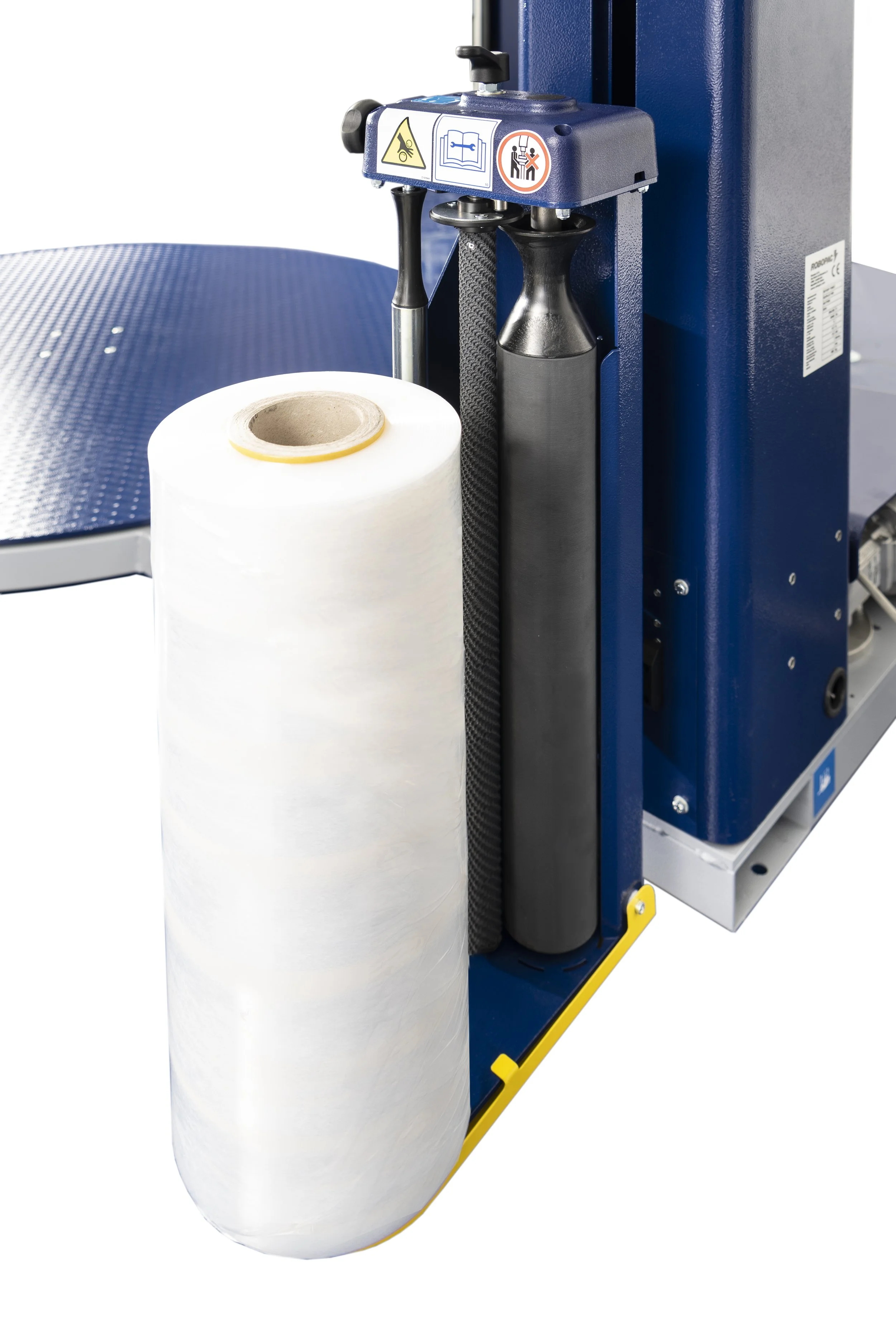
Pre-Stretched Film: Designed For Core-Break & Tension-Stretch Systems
Pre-stretched pallet wrap has already had much of its stretch taken out during manufacture. It arrives on the roll thinner, lighter and more rigid than standard machine film.
This makes it useful on hand wrapping operations, core-break machinery and tension-stretch systems where the machine or operator does not have a powered carriage stretching the film internally.
- ✓ Film already stretched before use
- ✓ Suitable for hand, core-break and tension-stretch systems
- ✓ Lower application force
- ✓ Less remaining elasticity
- ✓ Not the same as PPS machine film

Power Pre-Stretch: The Machine Stretches The Film
PPS machinery uses powered rollers inside the carriage to stretch the film during the wrapping cycle. The stretch is created mechanically by the carriage, not simply by dragging film around the pallet.
This is why PPS systems can produce higher film yield, stronger containment control and better consistency when the machine, film and load are matched correctly.
- ✓ Powered rollers stretch the film
- ✓ Higher film yield potential
- ✓ Better containment control
- ✓ Stronger for lightweight or unstable loads
- ✓ Depends heavily on correct setup
Pre-Stretched Hand Film vs Stretch Hand Wrap
Pre-stretched hand film and traditional stretch hand wrap are often grouped together, but they behave very differently in real warehouse operations.
Pre-stretched film is lighter, more rigid and easier to apply because most of the stretch has already been taken out during manufacture. Stretch hand wrap requires more effort from the operator, but usually handles awkward loads, sharp corners and inconsistent pallet profiles more effectively.
Pre-Stretched Hand Film
Best suited to uniform pallet profiles, simple wrapping applications and operations where speed, ease of use and lower operator effort are the priority.
- ✓ Quicker to apply
- ✓ Lower operator fatigue
- ✓ Good for clean uniform pallets
- ✓ Often economical in simple applications
- ✓ Weaker puncture resistance on sharp corners
Stretch Hand Wrap
Better suited to awkward loads, sharper edges and inconsistent pallet profiles where the operator needs more stretch, forgiveness and puncture resistance.
- ✓ Better on awkward pallets
- ✓ Stronger puncture resistance
- ✓ More forgiving around corners
- ✓ Better containment flexibility
- ✓ Can cost more if over-applied
| Operational Factor | Pre-Stretched Hand Film | Stretch Hand Wrap |
|---|---|---|
| Application speed | Usually quicker and easier to apply because the film is already rigid. | Requires more effort because the operator stretches the film during wrapping. |
| Operator fatigue | Lower physical effort during application. | Higher operator effort, especially across larger pallet volumes. |
| Best suited to | Uniform pallet profiles and simpler wrapping applications. | Awkward pallets, sharp edges and inconsistent load shapes. |
| Puncture resistance | Usually weaker because the film has already been stretched and has less elasticity remaining. | Generally stronger puncture resistance and better load forgiveness. |
| Containment flexibility | More limited once applied. | Usually better ability to conform around difficult pallet shapes. |
| Cost & material usage | Often lower material usage and lower cost to use in suitable applications. | Can become expensive if operators over-apply film or fail to stretch correctly. |
| Main operational risk | Can puncture or fail on awkward pallets and sharp corners. | Can lead to excessive film usage and inconsistent wrapping between operators. |
Pre-stretched hand film is excellent for fast, lightweight wrapping of stable and consistent pallets. Stretch hand wrap is usually stronger and more forgiving on awkward loads. The right choice depends on the load profile, containment requirement and operator environment.
Common Pre-Stretch & PPS Mistakes
Assuming All Stretch Film Behaves The Same
One of the biggest mistakes in pallet wrapping is treating all stretch films as interchangeable.
Pre-stretched films, PPS films, hand wrap and tension-stretch films all behave differently under load and require different application methods.
Using Core-Brake Systems On Lightweight Loads
Core-brake and tension-stretch systems rely heavily on pallet resistance to stretch the film.
Lightweight pallets often cannot generate enough resistance, leading to poor stretch, loose wrapping and being pulled off the load.
Reducing Tension To Stop Film Snapping
Many operators reduce film tension to stop snapping problems instead of fixing the real issue.
Incorrect carriage setup, worn rollers, bad wrap patterns or incorrect film selection are often the real cause.
Judging Film Purely On Micron Thickness
Micron alone does not determine wrapping performance.
Stretch capability, containment force, puncture resistance, machine setup and load profile all influence real operational performance.
High-Performance Stretch Hand Wrap Without The Usual Waste
Standard hand wrap can look cheap on the roll but become expensive in use. Operators over-apply it, rolls get damaged, edges crush, unwind becomes poor and film usage quietly increases.
Less Film Used. Lower Cost Per Pallet. Less Roll Waste.
Excelerate’s Goliath high-performance pallet wrap is a stretchy-type hand film designed to stretch to around 600 metres in use while keeping neck-in to a minimum.
More usable metres from the roll means fewer rolls consumed, less material applied and a much lower cost per pallet compared with many standard hand wraps.
Goliath also has reinforced roll edges. Rolls can be dropped, handled heavily or moved around busy warehouse operations without the edges crushing, splitting and ruining the unwind.

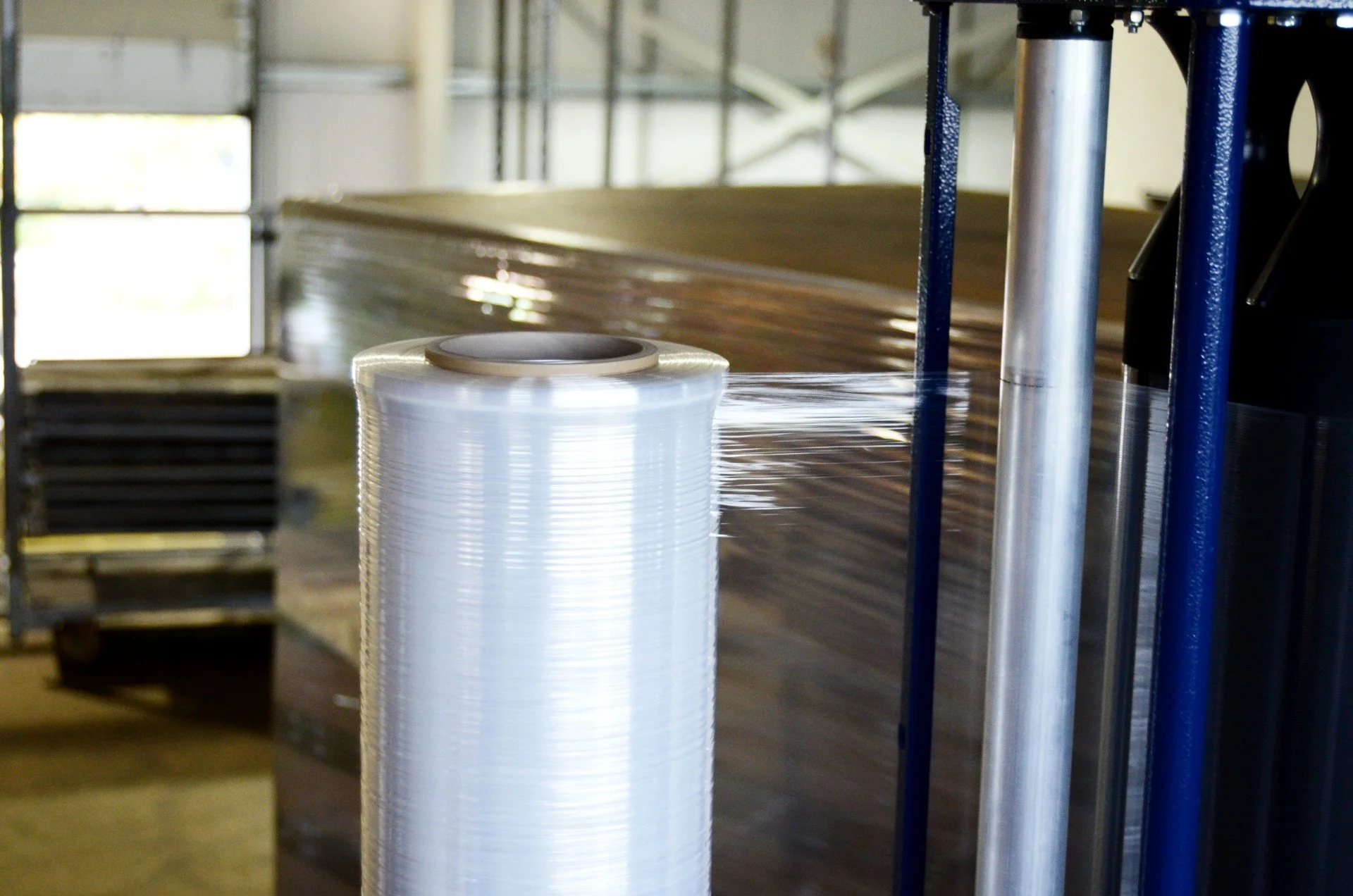
Why PPS Matters For Lightweight Pallet Loads
This is the part many people miss. Core-break and tension-stretch machines rely heavily on the pallet resisting the film pull. If the pallet is light, unstable or poorly locked together, the load may not provide enough resistance for consistent film stretch and containment.
PPS machinery changes that because the carriage stretches the film internally. The machine does not rely solely on the weight of the pallet to create film stretch.
Core-Break Risk
On light pallets, the film can pull the load instead of stretching properly. Operators often reduce tension, which then weakens containment.
PPS Advantage
The carriage stretches the film before it is applied to the pallet, giving more controlled film delivery around fragile or lightweight loads.
Better Load Control
Correct PPS setup can improve consistency on lighter loads, awkward pallets, empty cartons, trays and unstable product stacks.
Pre-Stretch vs PPS: Operational Comparison
The right choice depends on the machine, load type, required containment force, film cost target and how much control the operation needs over the wrapping process.
| Operational Factor | Pre-Stretched Film | Power Pre-Stretch (PPS) |
|---|---|---|
| What it is | A film that has already been stretched during manufacture. | A powered machine carriage system that stretches film during wrapping. |
| Designed for | Hand wrapping, core-break systems and tension-stretch machinery. | Pallet wrappers with powered pre-stretch carriage systems. |
| Stretch creation | Mostly already taken out before use. | Generated dynamically by driven rollers inside the carriage. |
| Reliance on pallet weight | Higher reliance on pallet resistance, especially on core-break/tension systems. | Lower reliance on pallet weight because the carriage stretches the film internally. |
| Lightweight load suitability | Can struggle if the pallet does not provide enough resistance during application. | Often better suited to lightweight or unstable loads when correctly configured. |
| Containment force potential | Usually lower or more limited depending on application method. | Higher potential when film, carriage and programme are correctly matched. |
| Common failure mode | Poor containment, over-pulling light loads or assuming the film can behave like PPS film. | Film snapping, poor stretch, unstable loads or wasted film caused by poor setup or worn carriage components. |
Where Operations Usually Get This Wrong
The film is often blamed first. In reality, the problem is usually the interaction between carriage type, film behaviour, load profile, operator settings and machine condition.
Wrong Film For The Carriage
A film designed for one wrapping method is used on a machine with a completely different stretching system. The result is often snapping, weak containment or inconsistent film behaviour.
- ✓ Pre-stretch film misunderstood as PPS film
- ✓ Machine film used on poor tension settings
- ✓ Lightweight loads pulled around the turntable
Machine Setup Masking The Real Problem
Operators often reduce tension to stop snapping. That may keep the machine running, but it can destroy containment force and leave pallets unstable.
- ✓ Tension reduced too far
- ✓ More revolutions added to compensate
- ✓ Film cost rises without improving stability
If a wrapper only runs by dropping the tension so low that the pallet is no longer contained properly, the operation has not solved the problem. It has moved the problem from the machine to the finished pallet.
Solid Film, Perforated Film & PPS Behaviour
PPS setup becomes even more important when moving between solid stretch film and perforated pallet wrap. The machine has to balance film stretch, containment, airflow, film integrity and product sensitivity.
Solid Machine Film
Solid PPS machine films are commonly used where high containment force, film yield and cost-per-pallet reduction are the main priorities.
Perforated Film
Perforated pallet wrap requires careful setup because the film structure needs to retain airflow while still creating stable load containment.
Carriage Condition
Worn rollers, damaged belts, poor film path, incorrect parameters or poor tension control can undermine any film system.
Machine Choice Matters As Much As Film Choice
A low-cost wrapper can look attractive until the load profile changes, operators start reducing tension, pallets become unstable or film use increases. The right machine depends on load weight, pallet stability, required containment force, film type and operational volume.
Core-Break / Tension-Stretch Machinery
Often suitable for lower-volume operations, stable pallets, basic wrapping requirements and applications where the load can tolerate the film pull created during wrapping.
- ✓ Lower machinery cost
- ✓ Simpler carriage system
- ✓ Can suit pre-stretched film
- ✓ More dependent on pallet resistance
Power Pre-Stretch Machinery
Often better for higher-volume sites, lightweight loads, unstable pallets, cost-per-pallet reduction and operations that need stronger control over film yield and containment force.
- ✓ Higher stretch and yield potential
- ✓ Stronger process control
- ✓ Better for lightweight loads
- ✓ Requires proper servicing and setup
Servicing & Diagnostics Are Critical On PPS Systems
A PPS wrapper can only perform correctly if the carriage is in good condition. Powered rollers, gearing, belts, tension control, sensors and machine parameters all affect film delivery and containment force.
When PPS machines drift out of calibration, operators often see film snapping, low stretch, high film use, inconsistent containment or unstable pallets. These issues need diagnosis, not guesswork.
Machinery Servicing
Preventative servicing, carriage checks and fault diagnosis for pallet wrapping machines.
View servicing →Pallet Wrap Optimisation
Understand how film usage, machine setup and containment force affect cost per pallet.
View optimisation →Film Snapping Diagnosis
Film snapping is often a system issue involving film, machine setup, rollers, tension and load profile.
View diagnosis →Related Technical Centre Guidance
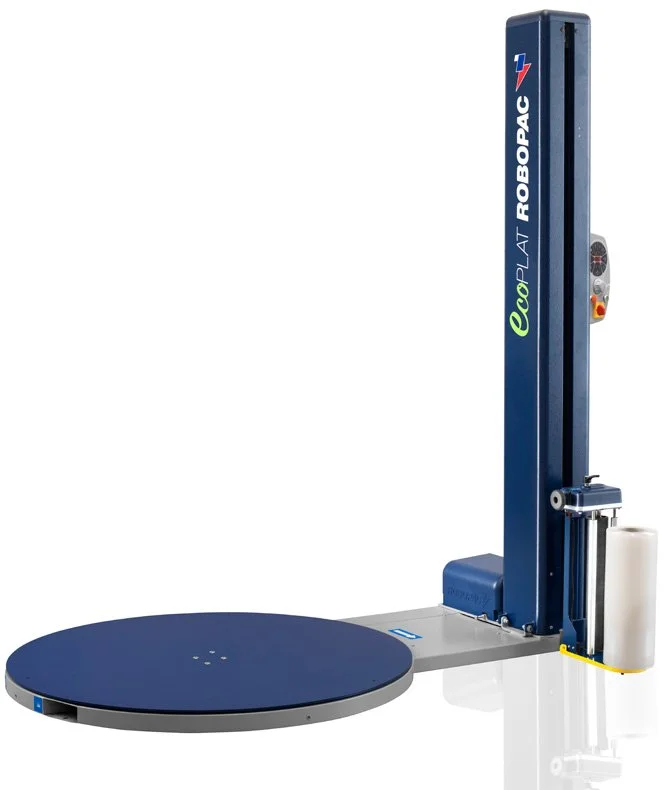
Turntable Pallet Wrappers
Compare mechanical brake, tension-stretch and powered pre-stretch turntable pallet wrapping machines.
View guide →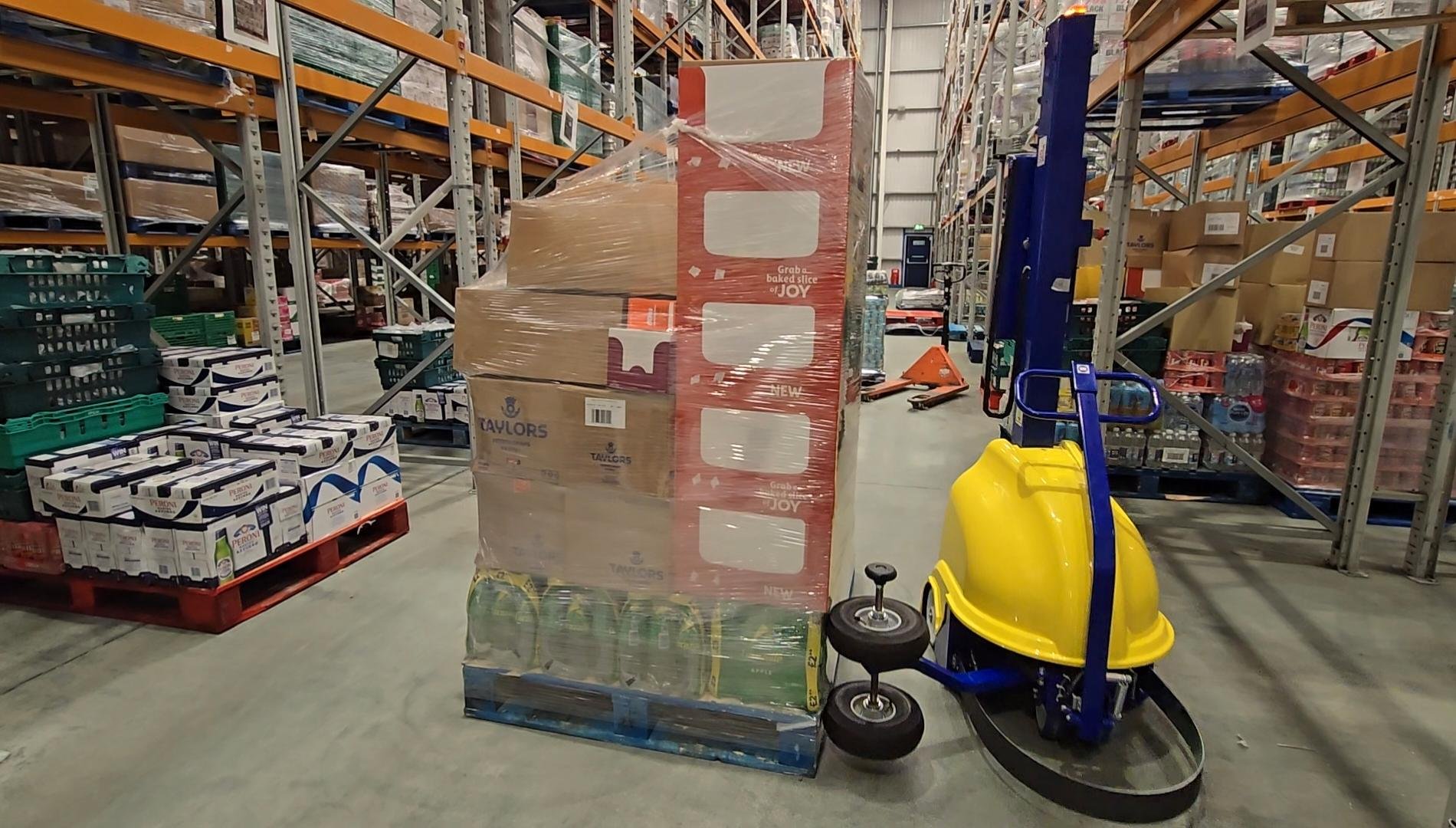
Robot vs Turntable Wrappers
Compare mobile robot wrappers and turntable wrappers for production lines, pick and pack and warehouse flow.
Compare machine types →
Load Stability
Learn how containment force, wrap pattern, film behaviour and machine setup affect pallet stability.
View load stability →FAQ - Pre-Stretch vs Power Pre-Stretch
Answers to common questions about pre-stretched film, Power Pre-Stretch systems, pallet wrapper setup and film-machine compatibility.
What is Power Pre-Stretch (PPS)?
What is the difference between pre-stretch and PPS?
Why is PPS better for lightweight pallets?
Why does pallet wrap neck-in?
Why does stretch film snap on pallet wrappers?
Is pre-stretched film stronger?
The Film Alone Is Not The System
Stable, cost-effective pallet wrapping depends on the relationship between film, machine type, carriage setup, load weight, containment force and operator behaviour.
Understanding the difference between pre-stretched film and Power Pre-Stretch machinery helps prevent poor film-machine combinations, unstable pallets and unnecessary film waste.